Learn about ranula symptoms, causes, diagnosis and treatment, including marsupialization and surgery. Consult Patil ENT Hospital, Nashik, for ENT evaluation.
Ranula: Symptoms, Causes, Diagnosis and Treatment
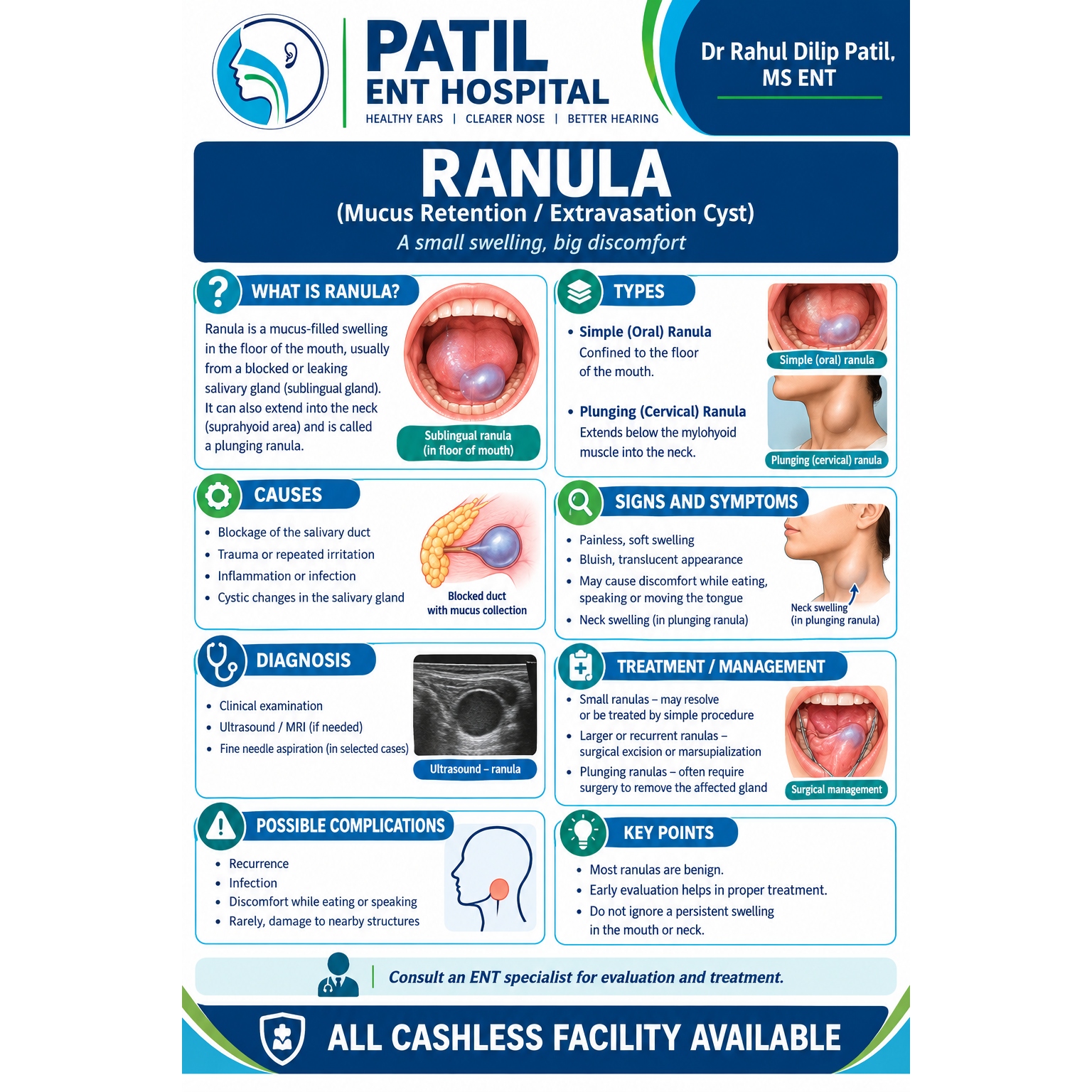
A ranula is a fluid-filled swelling that develops in the floor of the mouth, usually due to leakage or blockage of saliva from the sublingual salivary gland. It commonly appears as a soft, painless, bluish or translucent swelling beneath the tongue. Early diagnosis and appropriate treatment by an ENT specialist can help prevent recurrence and complications.
1. What is a ranula?
A ranula is a type of oral mucous cyst that usually develops when saliva leaks from the sublingual gland into the surrounding tissues. The name comes from its resemblance to a frog's belly.
There are two main types:

Simple ranula
A swelling confined to the floor of the mouth, beneath the tongue.

Plunging ranula
Saliva extends into the tissues of the neck, sometimes causing swelling below the jaw.
2. Causes of ranula
Common causes and contributing factors include:
- Leakage of saliva from the sublingual salivary gland.
- Injury to the salivary gland or its ducts.
- Blockage or damage of a salivary duct.
- Previous trauma or oral surgical procedures.
- Rarely, an underlying salivary duct abnormality.
A ranula is generally benign and is not a cancerous growth.
3. Signs and symptoms of ranula


9
The symptoms may vary depending on the size and location of the swelling.
- Soft swelling under the tongue: Usually on one side of the floor of the mouth.
- Bluish or translucent appearance: The cyst may look like a small, fluid-filled blister.
- Painless lump: Many ranulas do not cause pain.
- Difficulty eating or chewing: Larger swellings may interfere with normal mouth movements.
- Speech difficulties: A large swelling can affect tongue movement and pronunciation.
- Difficulty swallowing: May occur when the swelling becomes large.
- Neck swelling: A plunging ranula may produce a lump beneath the jaw or in the upper neck.
- Recurrent swelling: The lump may return after spontaneous rupture or incomplete treatment.
Seek urgent medical attention if swelling rapidly increases or causes difficulty breathing, swallowing saliva, or managing secretions.
4. Diagnosis of ranula
An ENT specialist or oral and maxillofacial surgeon may diagnose a ranula using the following methods:
- Clinical examination: Examination of the floor of the mouth, tongue and neck.
- Ultrasound: Helps identify the cyst and assess its size and extent.
- CT scan or MRI: May be recommended for a large or plunging ranula to determine how far it extends into the neck.
- Additional investigations: If the diagnosis is uncertain, further assessment may be needed to rule out other cysts or salivary gland conditions.
- Cleveland Clinic
- +1
5. Treatment of ranula
Treatment depends on the size of the swelling, symptoms, type of ranula and whether it has recurred.
1. Observation and monitoring
Small, uncomplicated ranulas may sometimes resolve spontaneously. A clinician should assess the swelling and recommend follow-up rather than relying on self-treatment.

2. Marsupialization
The surgeon opens the ranula and sutures its edges to create a drainage opening. This is a less extensive option in selected cases, but recurrence can occur.

3. Sublingual gland removal
Surgical removal of the affected sublingual salivary gland, usually through the mouth, addresses the source of saliva leakage and is associated with lower recurrence rates. The surgeon decides whether the ranula itself also needs to be removed.
4. Treatment of plunging ranula
Imaging helps establish the extent of the swelling. Treatment often involves addressing the affected sublingual gland and draining the collection as needed. A separate neck operation is not always necessary.
Needle aspiration or simple drainage alone may provide temporary relief but can be followed by recurrence. Treatment should be individualized by the treating specialist.
ScienceDirect
+2
6. Meta-analysis of ranula treatment
Published evidence supports selecting treatment according to the type of ranula and the likelihood of recurrence.
A 2025 systematic review and meta-analysis included 42 studies covering 686 oral ranulas and 429 plunging ranulas. It found that sublingual gland removal, with or without removal of the pseudocyst wall, had the highest treatment success and relatively consistent outcomes across studies.
PubMed
+1
A 2026 systematic review of recurrent ranulas reported that recurrence was generally lower when the affected sublingual gland was removed. However, the underlying studies varied in design, treatment methods and follow-up, so individual results may differ.
PubMed
+1
Clinical takeaway: Correct diagnosis and treatment of the underlying salivary gland problem are important for reducing recurrence. No single treatment is appropriate for every patient.
7. Prevention and postoperative care
There is no guaranteed way to prevent a ranula, but the following measures may help protect the mouth and support recovery:
- Avoid biting, squeezing or puncturing the swelling.
- Avoid unnecessary trauma to the floor of the mouth.
- Follow the surgeon's instructions regarding oral hygiene and diet after surgery.
- Take prescribed medicines as directed.
- Attend follow-up appointments to check healing and detect recurrence.
- Seek medical advice if swelling returns, increases or becomes painful.
8. About Patil ENT Hospital
Patil ENT Hospital
Nashik, Maharashtra
Dr Rahul Dilip Patil, MS ENT
5th Floor, Business Plaza, A Wing, opposite Panchavati Bus Depot, near Go Gas Pump, Adgaon Naka, Panchavati, Nashik, Maharashtra – 422003.
Website: www.drrahulpatilentdoctor.com
Keywords