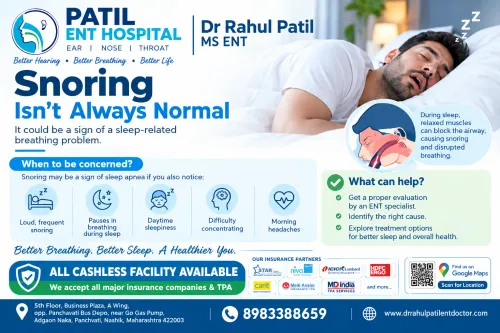
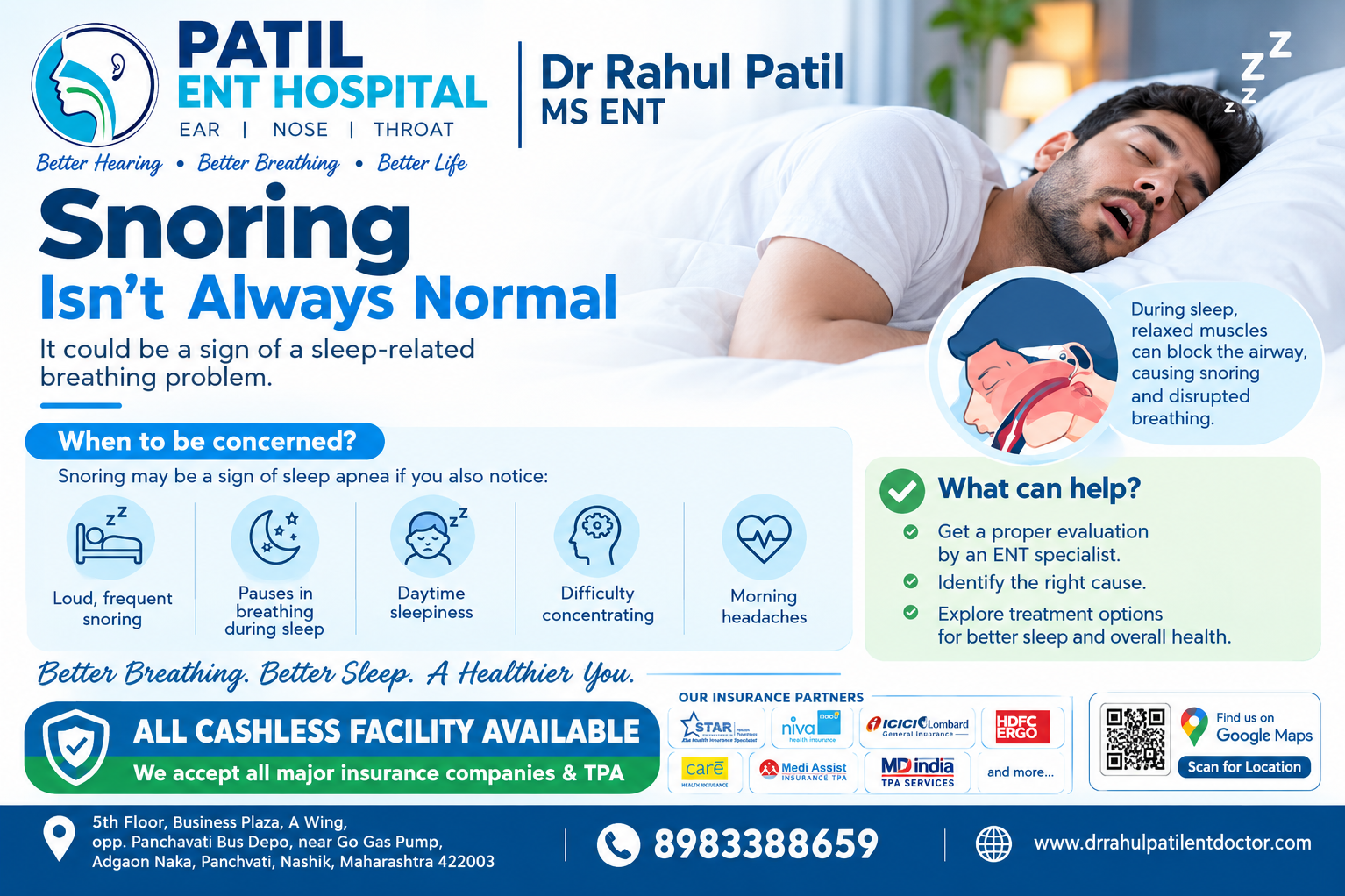
Looking for snoring treatment in Nashik? Learn about snoring causes, symptoms, sleep apnea diagnosis and treatment at Patil ENT Hospital. All cashless facility available, subject to approval.
Snoring – Causes, Symptoms, Diagnosis, Treatment & Prevention
SEO Content for Patil ENT Hospital, Nashik
Snoring Treatment in Nashik – Patil ENT Hospital
Snoring is a common sleep-related condition in which a person produces noisy breathing sounds during sleep due to vibration of tissues in the upper airway. It may occur occasionally or regularly and can affect sleep quality for both the individual and their family members.
Snoring can sometimes be a warning sign of Obstructive Sleep Apnea (OSA), a condition in which breathing repeatedly stops or becomes reduced during sleep.
At Patil ENT Hospital, Nashik, Dr Rahul Dilip Patil, MS ENT, provides ENT consultation and evaluation for snoring, nasal obstruction, enlarged tonsils, adenoid problems, and other upper airway conditions.
Chrápanie: Prečo vzniká a aké sú možnosti liečby? - príznak - Zdravoteka.sk
Sleep apnea: definition, symptoms & treatment – USZ
Snoring in adults: symptoms and causes
8
1. What is Snoring?
Snoring is the sound produced when air passes through a narrowed upper airway during sleep, causing vibration of the soft palate, uvula, tongue, and surrounding throat tissues.
During sleep, the muscles of the throat relax. If the airway becomes partially narrowed, airflow causes surrounding tissues to vibrate, producing snoring sounds.
Snoring may be associated with:
- Nasal blockage.
- Deviated nasal septum.
- Enlarged tonsils.
- Enlarged adenoids in children.
- Enlarged uvula or soft palate.
- Excess body weight.
- Obstructive Sleep Apnea.
Not everyone who snores has sleep apnea, but persistent loud snoring should be evaluated, particularly when accompanied by breathing pauses or daytime sleepiness.
2. Causes of Snoring
Common causes include:
- Nasal Obstruction: Blocked nasal passages due to allergies, nasal polyps, or deviated nasal septum can increase mouth breathing and snoring.
- Enlarged Tonsils: Enlarged tonsils can narrow the airway, especially in children.
- Enlarged Adenoids: Adenoid enlargement can cause nasal obstruction, mouth breathing, and snoring in children.
- Obesity: Excess fatty tissue around the neck and upper airway can narrow the breathing passage.
- Relaxation of Throat Muscles: Throat muscles relax during sleep, which can contribute to airway narrowing.
- Alcohol Consumption: Alcohol before bedtime can increase relaxation of throat muscles.
- Sleeping Position: Sleeping on the back can worsen snoring in some individuals.
- Smoking: Smoking can irritate and inflame the upper airway.
- Age-related Changes: Muscle tone in the throat may decrease with increasing age.
3. Symptoms Associated with Snoring
Common symptoms include:
- Loud snoring during sleep.
- Noisy breathing at night.
- Sleeping with the mouth open.
- Dry mouth in the morning.
- Morning headache.
- Disturbed or unrefreshing sleep.
- Excessive daytime sleepiness.
- Difficulty concentrating.
- Irritability and fatigue.
- Frequent nighttime awakenings.
- Witnessed pauses in breathing during sleep.
- Gasping or choking sensations during sleep.
Snoring with an Open Mouth | SnoreLab Insights
Important: Warning signs of sleep apnea
Seek medical evaluation if snoring is associated with:
- Repeated pauses in breathing.
- Choking or gasping during sleep.
- Excessive daytime sleepiness.
- Morning headaches.
- High blood pressure.
- Difficulty concentrating.
Severe daytime sleepiness can increase accident risk. Avoid driving when sleepy.
4. Types of Snoring
A. Primary Snoring
- Snoring without significant sleep-related breathing abnormalities.
- Usually caused by vibration of soft tissues in the upper airway.
- Does not necessarily indicate obstructive sleep apnea.
B. Obstructive Sleep Apnea-Associated Snoring
- Loud and persistent snoring.
- Repeated partial or complete airway obstruction during sleep.
- Breathing pauses followed by gasping or choking.
- May cause daytime fatigue and sleepiness.
C. Positional Snoring
- Snoring that becomes worse while sleeping on the back.
- May improve when sleeping on the side.
- Often associated with gravity-related narrowing of the upper airway.
Snoring & obstructive sleep apnea: when it is serious | Clear ENT
5. Diagnosis of Snoring
Proper evaluation helps identify the anatomical site of airway obstruction and determine whether sleep apnea is present.
At Patil ENT Hospital, assessment may include:
- Detailed Medical History: Assessment of snoring duration, sleep quality, daytime sleepiness, and breathing pauses.
- ENT Examination: Examination of the nose, throat, tonsils, soft palate, and uvula.
- Nasal Endoscopy: Helps identify nasal obstruction, deviated septum, nasal polyps, and other abnormalities.
- Throat Examination: Assessment of enlarged tonsils and other upper airway abnormalities.
- Sleep Study (Polysomnography): Used to diagnose and assess obstructive sleep apnea.
- Home Sleep Apnea Testing: May be appropriate for selected adults suspected of having uncomplicated obstructive sleep apnea.
Blogs | Vijay ENT Endoscopy Center
Snoring & Obstructive Sleep Apnoea - Treatment options from Vik Veer
6
6. Treatment of Snoring
Treatment depends on the underlying cause, severity of snoring, and presence or absence of obstructive sleep apnea.
A. Lifestyle Modifications
- Maintain a healthy body weight.
- Avoid alcohol before bedtime.
- Stop smoking.
- Maintain regular sleep timings.
- Try sleeping on your side instead of your back.
- Maintain good sleep hygiene.
- Exercise regularly.
B. Medical Treatment
Medical management may include:
- Treatment of allergic rhinitis.
- Nasal saline sprays or washes.
- Appropriate nasal steroid sprays when indicated.
- Management of nasal congestion.
- Treatment of associated upper airway conditions.
C. CPAP Therapy
Asian man sleeping peacefully on his side in bed while wearing a CPAP nasal mask
Continuous Positive Airway Pressure (CPAP) therapy is commonly recommended for obstructive sleep apnea.
Benefits include:
- Keeps the upper airway open during sleep.
- Reduces episodes of breathing interruption.
- Improves sleep quality.
- Reduces excessive daytime sleepiness.
- Helps manage health risks associated with untreated sleep apnea.
D. Surgical Treatment for Snoring
Surgery may be recommended in selected patients when anatomical abnormalities contribute to airway obstruction.
Endoscopic Septoplasty – Dr. Preethi Umamaheswaran MS DNB (ENT)
1. Septoplasty
Corrects a deviated nasal septum to improve nasal airflow.
Snoring in children: What's normal and when should you see a doctor? - CNA Lifestyle
2. Tonsillectomy
Removal of enlarged tonsils when they contribute to airway obstruction.
Adenoid hypertrophy medical vector illustration on white background
3. Adenoidectomy
Removal of enlarged adenoids, particularly in children with nasal obstruction and sleep-disordered breathing.
Top 5 Best Ways To Sleep With Sleep Apnea (Without CPAP) – VitalSleep
4. Uvulopalatopharyngoplasty (UPPP)
A procedure that modifies selected soft palate and throat tissues to improve airway space in appropriately selected patients.
Other treatment options, including oral appliances and selected airway procedures, may be considered depending on the sleep study and anatomical findings.
Important: Surgery for snoring does not guarantee that obstructive sleep apnea will be cured. Treatment should be planned after appropriate evaluation.
7. Snoring in Children
Çocukta Horlama Ve Uykuda Tıkanma - KBB & Baş Boyun Cerrahisi
Snoring in children should not be ignored, particularly when it occurs regularly.
Common causes include:
- Enlarged adenoids.
- Enlarged tonsils.
- Allergic rhinitis.
- Nasal obstruction.
- Childhood obstructive sleep apnea.
Symptoms in children may include:
- Mouth breathing.
- Loud snoring.
- Restless sleep.
- Pauses in breathing.
- Bedwetting.
- Poor concentration.
- Irritability and behavioural changes.
- Daytime tiredness or hyperactivity.
Early ENT evaluation is important because untreated sleep-disordered breathing can affect a child's behaviour, learning, and development.
8. Complications of Untreated Obstructive Sleep Apnea
Untreated moderate or severe obstructive sleep apnea may increase the risk of:
- High blood pressure.
- Heart disease.
- Stroke.
- Type 2 diabetes.
- Excessive daytime sleepiness.
- Reduced concentration and memory.
- Increased risk of road traffic accidents.
- Poor quality of life.
Early diagnosis and appropriate treatment can help reduce these risks.
9. Prevention of Snoring
- Maintain a healthy weight.
- Avoid smoking.
- Avoid alcohol close to bedtime.
- Sleep in a side position if positional snoring is present.
- Maintain regular sleep schedules.
- Treat nasal allergies.
- Maintain good nasal hygiene.
- Seek ENT consultation for persistent nasal obstruction.
- Get evaluated for sleep apnea if breathing pauses occur.
10. Why Choose Patil ENT Hospital, Nashik?
Bhaktapur International Hospital
bhaktapurinternationalhospital.com
Patil ENT Hospital, Nashik provides ENT consultation and evaluation for snoring, nasal obstruction, enlarged tonsils, adenoid hypertrophy, and other upper airway conditions.
Under the care of Dr Rahul Dilip Patil, MS ENT, patients can receive evaluation and guidance regarding appropriate management of snoring and related ENT conditions.
Our services include:
- ENT consultation for snoring.
- Evaluation of nasal obstruction.
- Assessment of deviated nasal septum.
- Evaluation of enlarged tonsils and adenoids.
- Assessment for suspected obstructive sleep apnea.
- Guidance regarding medical and surgical treatment options.
- Cashless insurance and TPA assistance.
All Cashless Facility Available*
Hospital: Patil ENT Hospital
Doctor: Dr Rahul Dilip Patil, MS ENT
Address: 5th Floor, Business Plaza, A Wing, Opp. Panchavati Bus Depot, Near Go Gas Pump, Adgaon Naka, Panchavati, Nashik, Maharashtra – 422003.
Contact: 8983388659
Website: www.drrahulpatilentdoctor.com
Cashless facility is subject to insurance policy terms, network eligibility, preauthorization, and insurer approval.
Keywords