Suffering from ringing, buzzing or noise in your ears? Learn about tinnitus causes, symptoms, diagnosis and treatment at Patil ENT Hospital, Nashik. Consult Dr. Rahul Patil, MS ENT. All cashless facilities available, subject to insurance approval.
Tinnitus – Causes, Symptoms, Diagnosis & Treatment | Patil ENT Hospital, Nashik
Çınlama – Erkan Karataş Prof. Dr.
ENT doctor doing an ear exam with an otoscope to a woman patient. Hearing clinic
Tinnitus Treatment | Topeka ENT
2. What Is Tinnitus?
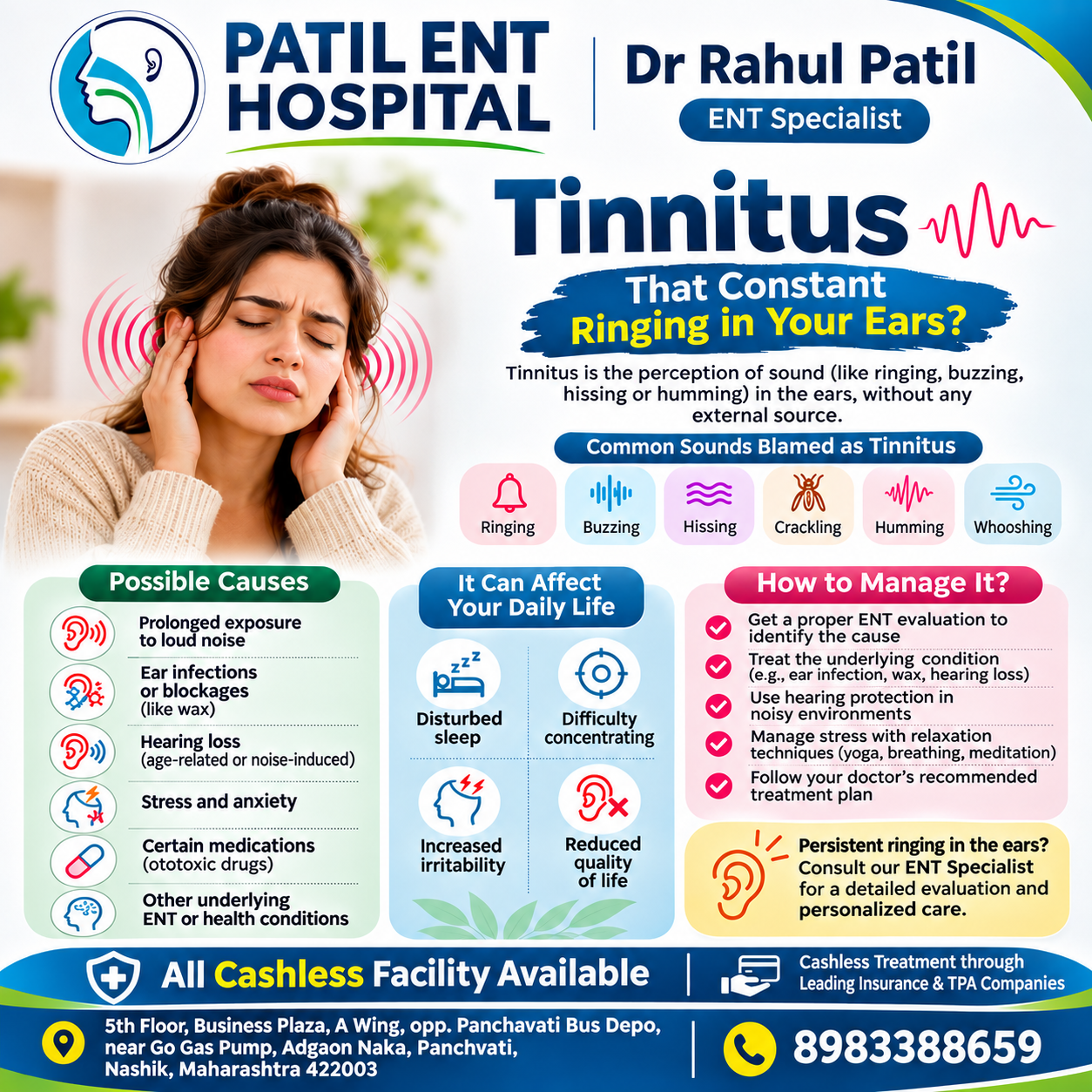
Tinnitus is a condition in which a person hears sounds in one or both ears without an external source of sound. These sounds may be continuous or intermittent and can vary in intensity.
Patients commonly describe tinnitus as:
- Ringing in the ears.
- Buzzing or humming sounds.
- Whistling sounds.
- Hissing or sizzling noises.
- Clicking or roaring sounds.
- Pulsating sounds that may match the heartbeat.
Tinnitus is not a disease itself but a symptom that may be associated with different ear-related or general medical conditions.
At Patil ENT Hospital, Nashik, patients can undergo ENT evaluation to identify possible causes of tinnitus and receive appropriate treatment guidance.
3. Types of Tinnitus
1. Subjective Tinnitus
- The most common type.
- Only the affected person can hear the sound.
- Commonly associated with hearing loss, noise exposure or inner-ear problems.
2. Objective Tinnitus
- Rare type of tinnitus.
- Sometimes associated with sounds generated by structures within the body.
- May occasionally be detected by an examining clinician.
3. Pulsatile Tinnitus
- Sounds occur in rhythm with the heartbeat.
- May be associated with blood vessel abnormalities, vascular conditions or other medical problems.
- Requires medical evaluation, particularly if newly developed or persistent.
4. Causes of Tinnitus
What can cause tinnitus | Causes of Tinnitus
Common causes include:
- Ear Wax (Cerumen): Excessive earwax can block the ear canal and produce tinnitus.
- Hearing Loss: Age-related hearing loss and noise-induced hearing loss are common causes.
- Exposure to Loud Noise: Prolonged exposure to loud music, machinery or occupational noise can damage inner-ear hair cells.
- Ear Infections: Middle-ear or outer-ear infections may cause tinnitus.
- Otosclerosis: Abnormal bone growth in the middle ear can affect hearing and sometimes cause tinnitus.
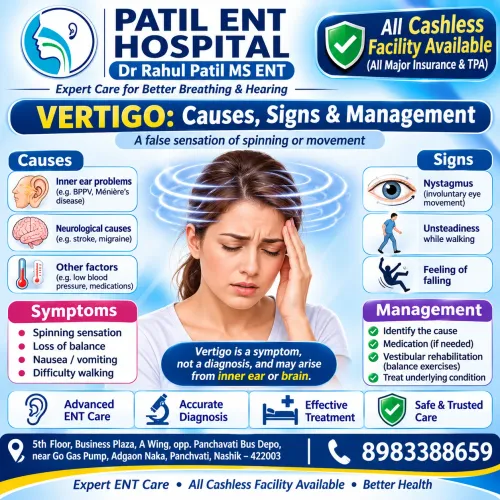
- Meniere's Disease: May cause tinnitus, fluctuating hearing loss, ear fullness and episodes of vertigo.
- Eustachian Tube Dysfunction: Middle-ear pressure problems can contribute to ear symptoms, including tinnitus.
- Certain Medications: Some medicines can cause or worsen tinnitus.
- Head or Neck Injury: Trauma may sometimes lead to tinnitus.
- Vascular Conditions: Blood vessel abnormalities can cause pulsatile tinnitus.
5. Symptoms of Tinnitus
Patients may experience one or more of the following symptoms:
- Persistent ringing in one or both ears.
- Buzzing, humming or whistling sounds.
- Difficulty concentrating.
- Disturbed sleep.
- Irritability and anxiety.
- Difficulty hearing conversations.
- Sensation of ear fullness.
- Associated dizziness or vertigo.
- Pulsating noise in the ears.
The severity may vary from mild occasional sounds to persistent tinnitus that affects daily activities and quality of life.
6. Diagnosis and Investigations of Tinnitus
Proper evaluation is important to identify the underlying cause.
At an ENT consultation, assessment may include:
1. Detailed Medical History
- Duration and nature of tinnitus.
- Whether it affects one or both ears.
- Exposure to loud noise.
- History of ear infections or hearing loss.
- Current medications and associated symptoms.
2. Otoscopic Examination
Examination of the ear canal and eardrum to identify earwax, infection or other abnormalities.
3. Pure Tone Audiometry (PTA)
A hearing test used to evaluate hearing levels and identify associated hearing loss.
4. Tympanometry
Assesses middle-ear pressure and eardrum mobility.
5. Otoacoustic Emissions (OAE)
May be recommended to evaluate cochlear function in selected patients.
6. Imaging Investigations
MRI, CT or vascular imaging may be recommended in selected cases, particularly for unilateral, pulsatile or otherwise concerning tinnitus.
7. Treatment of Tinnitus
Hearing Tests & Hearing Aids Thrissur | The Best Ent Clinic
Hearing Aids | Acoustic Hearing Centre
Tinnitus Sound Therapy Devices & White Noise Machines — ADCO Hearing Products
7
Treatment depends on the underlying cause, associated hearing loss and severity of symptoms.
1. Treatment of Earwax
Removal of impacted earwax may improve tinnitus when wax blockage is the contributing cause.
2. Treatment of Ear Infection
Appropriate medication may be prescribed when an ear infection is identified.
3. Hearing Aids
Hearing aids can improve communication and may reduce the perception of tinnitus in patients with associated hearing loss.
4. Sound Therapy
Background sounds, such as gentle music or white noise, may help make tinnitus less noticeable.
5. Tinnitus Retraining Therapy (TRT)
A structured approach combining sound therapy and counselling to help patients adapt to tinnitus.
6. Cognitive Behavioural Therapy (CBT)
Can help reduce tinnitus-related distress, anxiety and sleep difficulties.
7. Lifestyle Modifications
- Avoid exposure to loud noise.
- Use appropriate hearing protection.
- Maintain a regular sleep schedule.
- Manage stress.
- Avoid excessive caffeine if it worsens symptoms.
- Do not insert cotton buds or other objects into the ear.
- Review potentially tinnitus-causing medications with your doctor; do not stop prescribed medication yourself.
There is currently no single medicine that reliably cures all types of tinnitus. Treatment focuses on identifying treatable causes and improving quality of life.
8. When Should You Consult an ENT Specialist?
Consult an ENT specialist if you experience:
- Persistent ringing or buzzing in the ears.
- Tinnitus associated with hearing loss.
- Tinnitus affecting sleep or concentration.
- Tinnitus in only one ear.
- Pulsatile tinnitus (sound matching your heartbeat).
- Tinnitus associated with ear pain or dizziness.
Important medical warning
Sudden hearing loss, especially when accompanied by tinnitus, requires urgent medical assessment, ideally the same day. Do not delay treatment.
9. Tinnitus Treatment at Patil ENT Hospital, Nashik
Lions Charitable Eye Hospital Chattogram | Doctors24
At Patil ENT Hospital, Nashik, patients can consult Dr. Rahul Dilip Patil, MS ENT, for evaluation and management of ear-related problems, including:
- Tinnitus (ringing in the ears).
- Hearing loss.
- Ear infections.
- Ear wax blockage.
- Otosclerosis.
- Vertigo and dizziness.
- Noise-induced hearing loss.
- Eardrum perforation.
PATIL ENT HOSPITAL
Dr. Rahul Dilip Patil, MS ENT
ENT Specialist
Hospital Address
5th Floor, Business Plaza, A Wing, Opp. Panchavati Bus Depot, Near Go Gas Pump, Adgaon Naka, Panchvati, Nashik, Maharashtra – 422003.
Mobile: 8983388659
ALL CASHLESS FACILITY AVAILABLE
Cashless insurance and TPA facilities available, subject to policy coverage, network eligibility and insurer/TPA approval.
Website: www.drrahulpatilentdoctor.com
Keywords