Learn about snoring causes, symptoms, diagnosis and treatment at Patil ENT Hospital, Nashik. Consult Dr. Rahul Dilip Patil, MS ENT. Cashless facilities available, subject to insurance and TPA approval.
1. What Is Snoring?
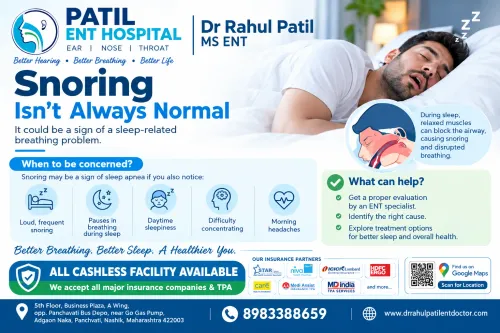
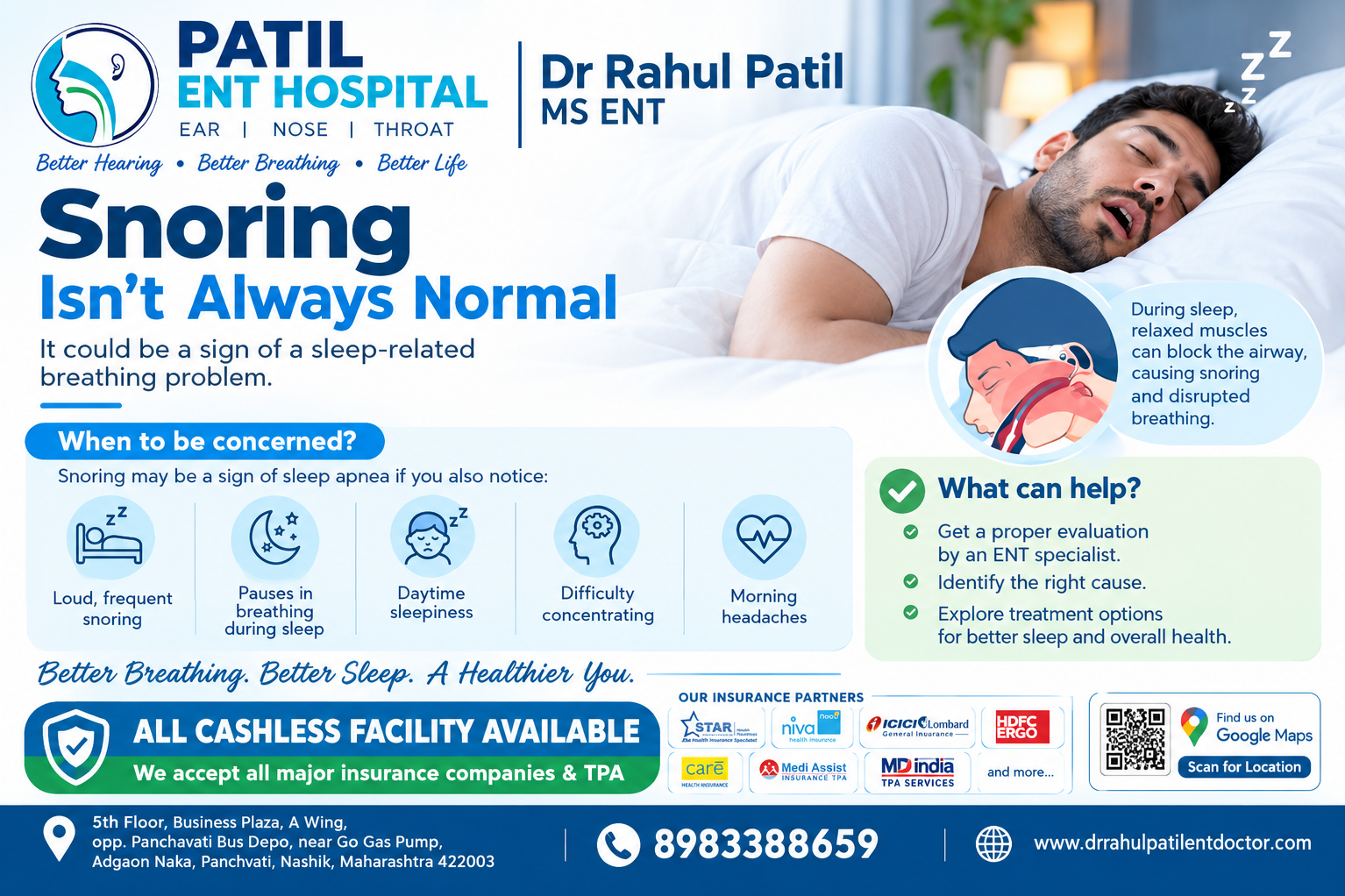
Snoring is a common condition in which a person makes noisy sounds while sleeping. It occurs when airflow through the nose and throat becomes partially obstructed, causing surrounding soft tissues to vibrate during breathing.
Snoring may occur occasionally due to a cold, nasal congestion or sleeping position. However, frequent, loud snoring can sometimes indicate obstructive sleep apnoea (OSA), a sleep-related breathing disorder that requires medical evaluation.
At Patil ENT Hospital, Nashik, patients can seek ENT evaluation to identify possible causes of snoring and discuss suitable treatment options.
2. Causes of Snoring
Common causes include:
- Nasal blockage: Allergic rhinitis, sinusitis, nasal polyps or a deviated nasal septum can restrict airflow.
- Enlarged tonsils and adenoids: These can narrow the airway, particularly in children.
- Obesity: Excess tissue around the neck can narrow the upper airway.
- Sleeping on the back: This position may allow the tongue and soft tissues to fall backward.
- Alcohol and sedatives: These can relax throat muscles and worsen snoring.
- Age-related changes: Reduced muscle tone in the throat may contribute to snoring.
- Structural airway problems: An elongated soft palate, enlarged uvula or other anatomical variations can contribute.
- Obstructive sleep apnoea: Repeated narrowing or closure of the upper airway during sleep can cause snoring and interrupted breathing.
3. Symptoms Associated With Snoring
People who snore may experience the following symptoms:
- Loud or frequent snoring during sleep.
- Waking up with a dry mouth or sore throat.
- Morning headaches.
- Unrefreshing sleep despite spending enough time in bed.
- Daytime sleepiness or fatigue.
- Difficulty concentrating during the day.
- Restless sleep or frequent awakenings.
- Gasping, choking or pauses in breathing during sleep.
Important: Loud snoring accompanied by witnessed pauses in breathing, choking or excessive daytime sleepiness should be assessed by a doctor. These may be signs of obstructive sleep apnoea.
4. Diagnosis of Snoring
An ENT specialist evaluates the nose, throat and upper airway to identify possible causes.
Diagnostic assessment may include:
- Medical and sleep history: Frequency of snoring, sleep quality, daytime symptoms and relevant medical history.
- ENT examination: Assessment of nasal blockage, tonsils, palate and other airway structures.
- Nasal endoscopy: When indicated, a small flexible or rigid endoscope may be used to examine the nasal passages and relevant airway structures.
- Sleep study: Polysomnography or an appropriate home sleep apnoea test may be recommended when obstructive sleep apnoea is suspected.
The choice of investigations depends on the patient's symptoms and examination findings.
5. Treatment Options for Snoring
Treatment depends on the underlying cause, severity and whether sleep apnoea is present.
1. Lifestyle modifications
- Maintain a healthy weight.
- Sleep on your side if snoring is worse on your back.
- Avoid alcohol close to bedtime.
- Maintain a regular sleep schedule.
- Avoid smoking and seek advice about persistent nasal congestion.
2. Medical treatment
Treatment for allergies or nasal inflammation may help when these conditions contribute to snoring. Medication should be selected according to the diagnosis.
3. Surgical treatment
Selected patients may benefit from procedures addressing an anatomical obstruction, such as septoplasty for a deviated nasal septum or tonsil surgery for significantly enlarged tonsils. Surgery is not necessary for every patient who snores.
4. Treatment for obstructive sleep apnoea
Depending on the diagnosis, treatment may include CPAP therapy, selected oral appliances, lifestyle changes or appropriate surgery. Treatment should be guided by a qualified clinician.
6. Snoring in Children
Snoring in children should not always be considered harmless. Persistent snoring may be associated with enlarged tonsils or adenoids, nasal allergies or sleep-disordered breathing.
Parents should seek medical advice if a child has:
- Frequent snoring.
- Mouth breathing during sleep.
- Pauses in breathing or gasping.
- Restless sleep.
- Daytime behavioural, concentration or learning difficulties.
An ENT assessment can help determine whether further investigation or treatment is needed.
7. When Should You Consult an ENT Specialist?
Consult an ENT specialist if snoring is frequent, persistent or affecting sleep quality. Seek prompt medical evaluation if you notice pauses in breathing, repeated choking during sleep or significant daytime sleepiness. If you are dangerously sleepy while driving, do not drive until medically assessed.
Early assessment can help identify nasal obstruction, throat abnormalities and possible sleep apnoea.
8. Snoring Treatment at Patil ENT Hospital, Nashik
PATIL ENT HOSPITAL
ENT Consultation and Snoring Evaluation
Consult Dr. Rahul Dilip Patil, MS ENT, for evaluation of snoring, nasal obstruction, tonsil-related problems and other ENT conditions.
Hospital Address
5th Floor, Business Plaza, A Wing, Opp. Panchavati Bus Depot, Near Go Gas Pump, Adgaon Naka, Panchvati, Nashik, Maharashtra – 422003.
Appointment Contact
Call 8983388659
Cashless Facility Available
Cashless insurance and TPA facilities are available, subject to the patient's policy terms, insurer or TPA eligibility, and authorization.
Website: www.drrahulpatilentdoctor.com
Keywords