Looking for vertigo treatment in Nashik? Learn about vertigo symptoms, causes, BPPV, diagnosis and treatment at Patil ENT Hospital. All cashless facility available, subject to approval.
Vertigo – Symptoms, Causes, Diagnosis & Treatment
SEO Content for Patil ENT Hospital, Nashik
Vertigo treatment in Nashik by Dr Rahul Dilip Patil, MS ENT. Learn about the causes, symptoms, diagnosis, treatment, and prevention of vertigo, including BPPV, vestibular neuritis, and inner ear disorders. Cashless facility available, subject to insurance approval.
1. What is Vertigo?
Vertigo is a sensation in which a person feels that they or their surroundings are spinning or moving, even when they are standing or sitting still.
It is commonly associated with problems affecting the inner ear or vestibular system, which controls balance and body coordination.
Vertigo can occur suddenly and may last for a few seconds, minutes, hours, or even days, depending on the underlying cause.
At Patil ENT Hospital, Nashik, patients experiencing dizziness, spinning sensations, imbalance, or recurrent vertigo can undergo ENT evaluation to identify the cause and receive appropriate treatment.
Vertigo - Ear, Nose & Throat | UWorld Medical Library
Feeling Dizzy? Experts Share How To Tell Which Ear Is Causing Vertigo, Plus the Move That Treats It
Vestibular system anatomy and inner ear medical structure outline diagram
8
2. Causes of Vertigo
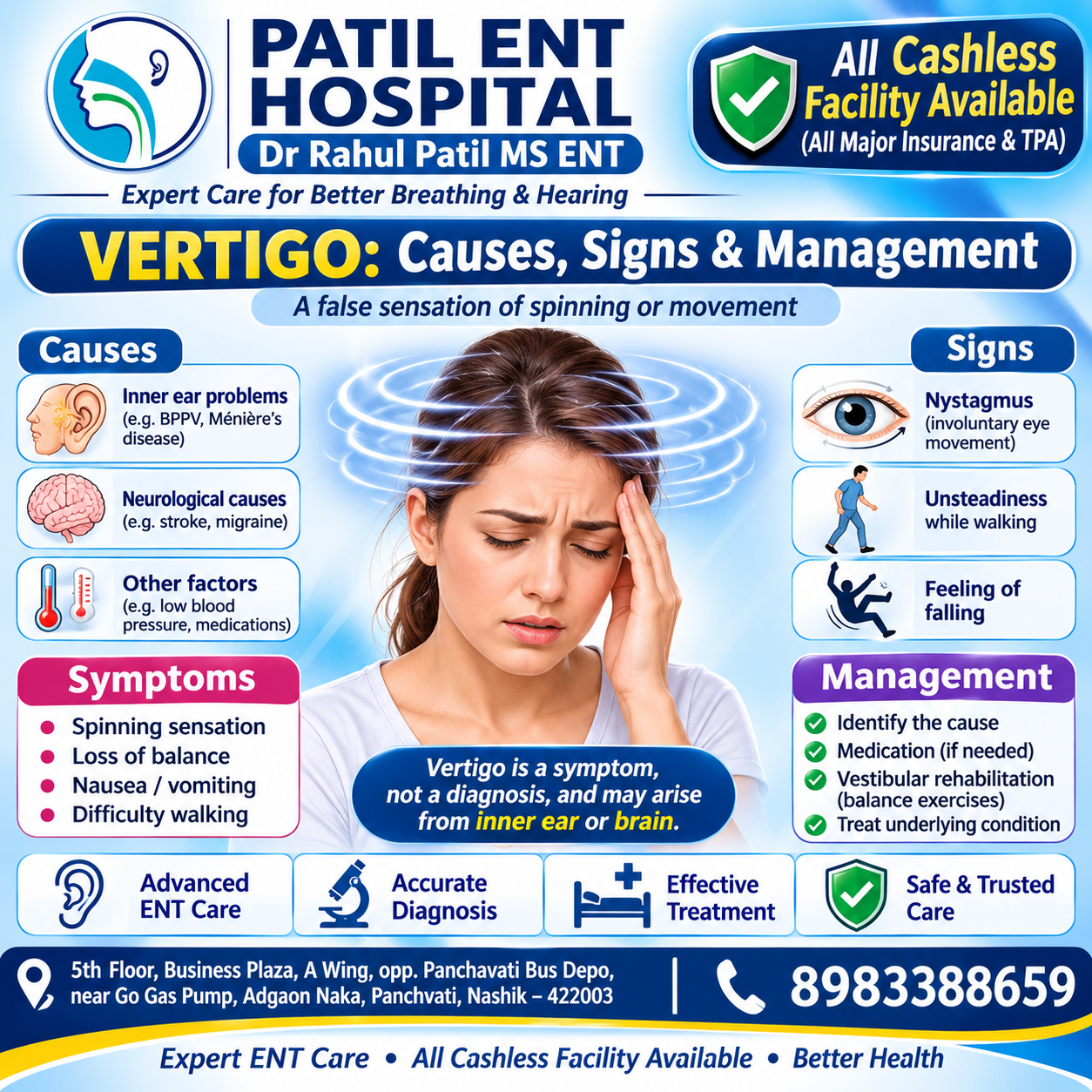
Vertigo can occur due to several inner ear and neurological conditions.
- BPPV (Benign Paroxysmal Positional Vertigo): Small calcium crystals become displaced within the inner ear, causing brief spinning sensations during head movements.
- Vestibular Neuritis: Inflammation of the vestibular nerve, often following a viral infection, causing sudden and prolonged vertigo.
- Labyrinthitis: Inflammation of the inner ear that can cause vertigo, imbalance, and sometimes hearing loss.
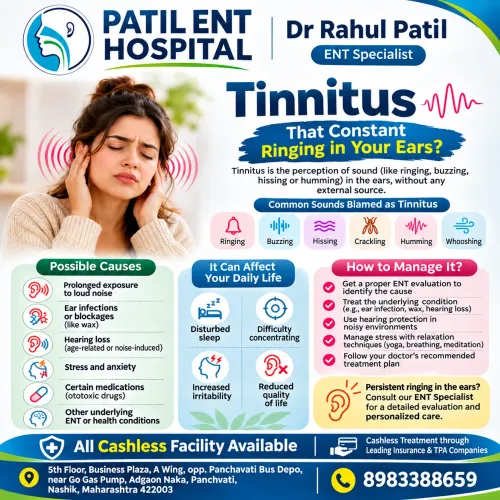
- Meniere's Disease: An inner ear disorder associated with episodes of vertigo, fluctuating hearing loss, tinnitus, and ear fullness.
- Vestibular Migraine: A migraine-related condition that can cause dizziness and vertigo, sometimes without headache.
- Head Injury: Trauma may affect the inner ear and balance system.
- Other neurological conditions: Certain brain and nervous system disorders can also cause vertigo.
3. Symptoms of Vertigo
Common symptoms include:
- Spinning sensation or feeling that the surroundings are moving.
- Dizziness and loss of balance.
- Nausea and vomiting.
- Difficulty walking or standing steadily.
- Unsteadiness during head movements.
- Sweating and discomfort.
- Ringing sensation in the ears (tinnitus).
- Ear fullness or pressure.
- Hearing loss in certain inner ear disorders.
- Difficulty concentrating during episodes.
When Vertigo Strikes: The Questions I Needed Answered | Houston Methodist On Health
Important warning signs
Sudden vertigo accompanied by facial weakness, difficulty speaking, double vision, weakness or numbness in the limbs, inability to walk, or a severe unusual headache may indicate a stroke or another emergency. Seek immediate emergency medical care.
4. Types of Vertigo
Benign Positional Vertigo (BPPV): Symptoms, Diagnosis, and Step-By-Step Home Treatment Maneuvers
A. BPPV (Benign Paroxysmal Positional Vertigo)
- Most common peripheral cause of vertigo.
- Brief spinning episodes, usually lasting less than a minute.
- Triggered by turning the head, lying down, or getting up from bed.
- Often treated successfully with repositioning manoeuvres such as the Epley manoeuvre.
Vestibular neuritis as inner ear nerve inflammation disease outline diagram
B. Vestibular Neuritis
- Inflammation of the vestibular nerve.
- Sudden severe spinning sensation.
- Nausea, vomiting, and imbalance.
- Hearing is usually not affected.
Labyrinthitis (vestibular neuritis) is the inflammation of inner ear.
C. Labyrinthitis
- Inflammation of the inner ear.
- Vertigo and balance disturbances.
- May be associated with hearing loss and tinnitus.
D. Meniere's Disease
- Recurrent episodes of vertigo.
- Fluctuating hearing loss.
- Ringing in the ear (tinnitus).
- Feeling of fullness or pressure inside the ear.
The Room Is Spinning: A Complete Guide to Vestibular Migraine | Migraine Companion
E. Vestibular Migraine
- Episodes of dizziness or vertigo.
- May occur with or without headache.
- May be associated with sensitivity to light and sound.
5. Diagnosis of Vertigo
Accurate diagnosis is important to identify the underlying cause and select the appropriate treatment.
At Patil ENT Hospital, an ENT evaluation may include:
- Detailed clinical history: Duration, frequency, triggers, and associated symptoms.
- Ear examination: Examination of the ear canal and eardrum.
- Dix-Hallpike Test: Helps diagnose posterior canal BPPV.
- Supine Roll Test: Helps identify horizontal canal BPPV.
- Nystagmus Examination: Assessment of involuntary eye movements.
- Hearing Assessment (Audiometry): Recommended when hearing loss or tinnitus is present.
- Vestibular Function Tests: Selected patients may require additional balance testing.
- MRI or CT Scan: May be advised when central neurological or other serious causes are suspected.
VisualEyes™ | Dix-Hallpike Test / Maneuver | Interacoustics
HearClear India - Best Hearing Aids | Free Hearing Test | 40+ Clinics
8
6. Treatment of Vertigo
Treatment depends on the underlying diagnosis.
A. Epley Manoeuvre
- Commonly used for posterior canal BPPV.
- Helps move displaced calcium crystals back to their appropriate location.
- Often provides significant improvement after one or more sessions.
B. Vestibular Rehabilitation Therapy
- Special exercises designed to improve balance.
- Helps the brain adapt to changes in vestibular function.
- May be recommended for vestibular neuritis and persistent imbalance.
C. Medications
Depending on the condition, doctors may prescribe:
- Medicines for nausea and vomiting.
- Short-term vestibular suppressants for severe acute symptoms.
- Specific treatment for migraine-associated vertigo.
- Appropriate treatment for underlying ear conditions.
Long-term use of vestibular suppressants is generally avoided because it can delay balance compensation.
D. Treatment of Meniere's Disease
- Dietary and lifestyle modifications.
- Medical management.
- Monitoring of hearing.
- Specialist-directed treatment for persistent or severe cases.
E. Treatment of Underlying Conditions
Vertigo caused by migraine, infection, neurological disorders, or other medical conditions requires condition-specific treatment.
7. Precautions and Home Care for Vertigo
- Avoid sudden head movements.
- Get up slowly from bed.
- Sit or lie down when spinning sensations occur.
- Avoid driving during vertigo episodes.
- Maintain adequate hydration.
- Avoid alcohol if it worsens symptoms.
- Follow prescribed vestibular exercises.
- Take precautions against falls.
- Avoid performing repositioning manoeuvres without proper assessment, particularly if you have neck or back problems.
8. When Should You Consult an ENT Specialist?
Consult an ENT specialist if you experience:
- Repeated episodes of spinning sensations.
- Dizziness when turning your head.
- Difficulty maintaining balance.
- Vertigo associated with hearing loss.
- Ringing in the ears.
- Nausea and vomiting associated with dizziness.
- Persistent dizziness affecting daily activities.
Early assessment helps identify the cause and prevent complications such as falls and injuries.
9. Why Choose Patil ENT Hospital, Nashik?
Patil ENT Hospital, Nashik offers ENT consultation and evaluation for patients experiencing vertigo, dizziness, balance disturbances, and inner ear disorders.
- ENT consultation by Dr Rahul Dilip Patil, MS ENT.
- Evaluation of vertigo and balance disorders.
- Assessment of BPPV and other inner ear conditions.
- Guidance regarding appropriate vertigo treatment.
- Evaluation of associated hearing problems and tinnitus.
- Cashless insurance and TPA assistance.
All Cashless Facility Available*
Cashless treatment is subject to insurance policy terms, network eligibility, preauthorization, and insurer approval.
Doctor: Dr Rahul Dilip Patil, MS ENT
Hospital: Patil ENT Hospital, Nashik
Address: 5th Floor, Business Plaza, A Wing, Opp. Panchavati Bus Depot, Near Go Gas Pump, Adgaon Naka, Panchavati, Nashik, Maharashtra – 422003.
Contact: 8983388659
Keywords