Learn the signs and symptoms of Vitamin B12 deficiency, including fatigue, weakness, numbness, tingling and dizziness. Diagnosis and treatment information at Patil ENT Hospital, Nashik. All Cashless Facility Available.
Vitamin B12 Deficiency: Signs, Symptoms, Causes & Treatment | Patil ENT Hospital, Nashik
Vitamin B12: Benefits, Deficiency Symptoms, Foods, Supplements & Normal Levels
Vitamin & Mineral Deficiency Symptoms: A Practical Symptom Checker – Arbor Vitamins
Top 7 Vegan Supplements for Optimal Health | Liquid Health — Liquid Healt
Vitamin B12 deficiency is a common nutritional problem that can affect the blood, nerves and brain. Vitamin B12 plays an important role in red blood cell formation, DNA synthesis and healthy nerve function.
A deficiency may develop gradually and cause symptoms such as tiredness, weakness, numbness, tingling in the hands and feet, memory problems and difficulty maintaining balance.
At Patil ENT Hospital, Nashik, patients can seek medical evaluation for symptoms such as dizziness, weakness, tingling sensations and other complaints that may require further investigation.
1. What Is Vitamin B12 Deficiency?
Vitamin B12 deficiency occurs when the body does not have enough vitamin B12 to maintain normal blood cell production and neurological function.
Vitamin B12, also known as cobalamin, is a water-soluble vitamin naturally found in animal-based foods such as milk, eggs, fish, meat and dairy products.
When the body does not absorb or receive sufficient vitamin B12, it can lead to:
- Megaloblastic anaemia.
- Nerve damage (peripheral neuropathy).
- Memory and concentration difficulties.
- Fatigue and general weakness.
- Balance and walking problems.
Early diagnosis and treatment are important because prolonged deficiency can sometimes cause permanent nerve damage.
2. Signs and Symptoms of Vitamin B12 Deficiency
Vitamin B12: Benefits, Deficiency Symptoms, Foods, Supplements & Normal Levels
Symptoms may develop slowly and can vary from person to person.
A. General Symptoms
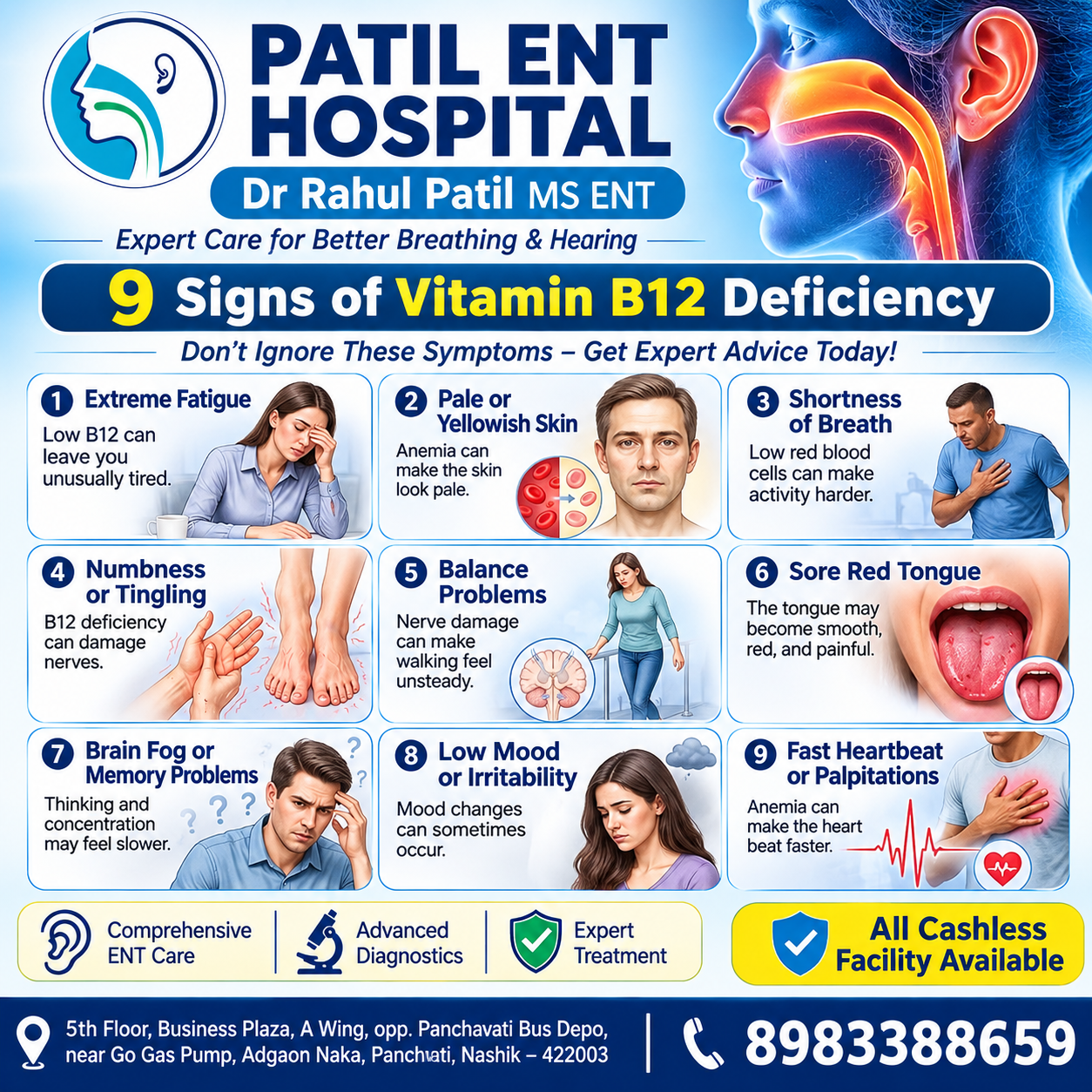
- Persistent tiredness: Feeling exhausted even after adequate rest.
- Weakness: Reduced energy and difficulty performing daily activities.
- Pale or yellowish skin: May occur due to anaemia.
- Breathlessness: Particularly during physical activity.
- Dizziness: Feeling light-headed or faint.
- Headache: Recurrent headaches may occur in some people.
B. Neurological Symptoms
- Numbness: Reduced sensation in the hands and feet.
- Tingling sensation: Pins-and-needles feeling in fingers and toes.
- Difficulty walking: Problems with coordination and balance.
- Muscle weakness: Weakness affecting the arms or legs.
- Memory problems: Difficulty remembering things.
- Poor concentration: Difficulty focusing on daily tasks.
C. Mouth and Tongue Symptoms
- Smooth, red and painful tongue (glossitis).
- Burning sensation in the tongue.
- Mouth ulcers.
- Cracks at the corners of the mouth.
- Changes in taste sensation.
D. Psychological Symptoms
- Irritability.
- Low mood.
- Anxiety.
- Confusion.
- Difficulty concentrating.
Important: Vitamin B12 deficiency can cause neurological symptoms even without anaemia. Do not ignore persistent numbness, tingling or balance difficulties.
3. Causes of Vitamin B12 Deficiency
The common causes include:
- Poor dietary intake: People following strict vegetarian or vegan diets without adequate fortified foods or supplements may be at increased risk.
- Pernicious anaemia: An autoimmune condition that affects the absorption of vitamin B12.
- Stomach disorders: Certain stomach conditions and surgeries can reduce vitamin B12 absorption.
- Intestinal disorders: Conditions such as Crohn's disease and coeliac disease may interfere with absorption.
- Medications: Long-term use of metformin and acid-reducing medicines may contribute to deficiency.
- Increasing age: Vitamin B12 absorption may decrease with age.
4. Who Is at Risk?
- Strict vegetarians and vegans.
- Older adults.
- People with digestive or intestinal disorders.
- Patients who have undergone stomach or intestinal surgery.
- People with pernicious anaemia.
- Individuals taking certain medications for prolonged periods.
5. Diagnosis of Vitamin B12 Deficiency
Early diagnosis helps prevent complications.
The following investigations may be recommended:
- Serum Vitamin B12: Measures vitamin B12 levels in the blood.
- Complete Blood Count (CBC): Helps identify anaemia and enlarged red blood cells.
- Peripheral Blood Smear: Examines the appearance of red blood cells.
- Methylmalonic Acid (MMA): Helps identify functional vitamin B12 deficiency, particularly when B12 results are borderline.
- Homocysteine: May be elevated in vitamin B12 deficiency.
- Additional investigations: May be needed to identify the underlying cause, including pernicious anaemia.
Test results should be interpreted alongside symptoms and clinical findings.
6. Treatment of Vitamin B12 Deficiency
Treatment depends on the severity of deficiency and its underlying cause.
A. Vitamin B12 Supplements
Oral vitamin B12 supplements may be prescribed for patients with dietary deficiency or certain absorption problems.
B. Vitamin B12 Injections
Vitamin B12 injections may be recommended for:
- Severe vitamin B12 deficiency.
- Neurological symptoms.
- Pernicious anaemia.
- Significant absorption problems.
- Patients who require rapid replacement under medical supervision.
C. Dietary Changes
Need vitamin B12? Add these 7 nutrient-packed foods to your diet
DGA recommendations' impact on animal proteins
10 Vegetarian Vitamin B12 Foods To Your Diet | Femina.in
Include vitamin B12-rich foods in your diet:
- Milk and dairy products.
- Eggs.
- Fish and seafood.
- Chicken and meat.
- Vitamin B12-fortified cereals.
- Fortified plant-based milk.
Strict vegetarians and vegans should discuss appropriate fortified foods or supplements with their healthcare professional.
7. Complications of Untreated Vitamin B12 Deficiency
If vitamin B12 deficiency remains untreated, it may lead to:
- Megaloblastic anaemia.
- Peripheral neuropathy.
- Persistent numbness and tingling.
- Difficulty walking and maintaining balance.
- Memory and cognitive problems.
- Vision disturbances in some cases.
- Potentially permanent neurological damage.
Seek prompt medical attention for progressive weakness, difficulty walking, new neurological symptoms or significant confusion.
8. Prevention of Vitamin B12 Deficiency
- Maintain a balanced diet containing adequate vitamin B12.
- Include fortified foods if following a vegetarian or vegan diet.
- Get tested if you have symptoms or known risk factors.
- Follow medical advice regarding supplementation.
- Do not take high-dose supplements without understanding the underlying cause of deficiency.
PATIL ENT HOSPITAL
Dr Rahul Dilip Patil, MS ENT
5th Floor, Business Plaza, A Wing, Opp. Panchavati Bus Depot, Near Go Gas Pump, Adgaon Naka, Panchvati, Nashik – 422003, Maharashtra.
Contact: 8983388659
Website: www.drrahulpatilentdoctor.com
All Cashless Facility Available
Keywords