Learn about noise-induced hearing loss symptoms, causes, treatment and prevention at Patil ENT Hospital, Nashik. Consult Dr. Rahul Dilip Patil, MS ENT. All cashless facility available, subject to approval.
Noise-Induced Hearing Loss: Symptoms, Treatment and Prevention


7
Noise-Induced Hearing Loss – Detailed SEO Content for Patil ENT Hospital, Nashik
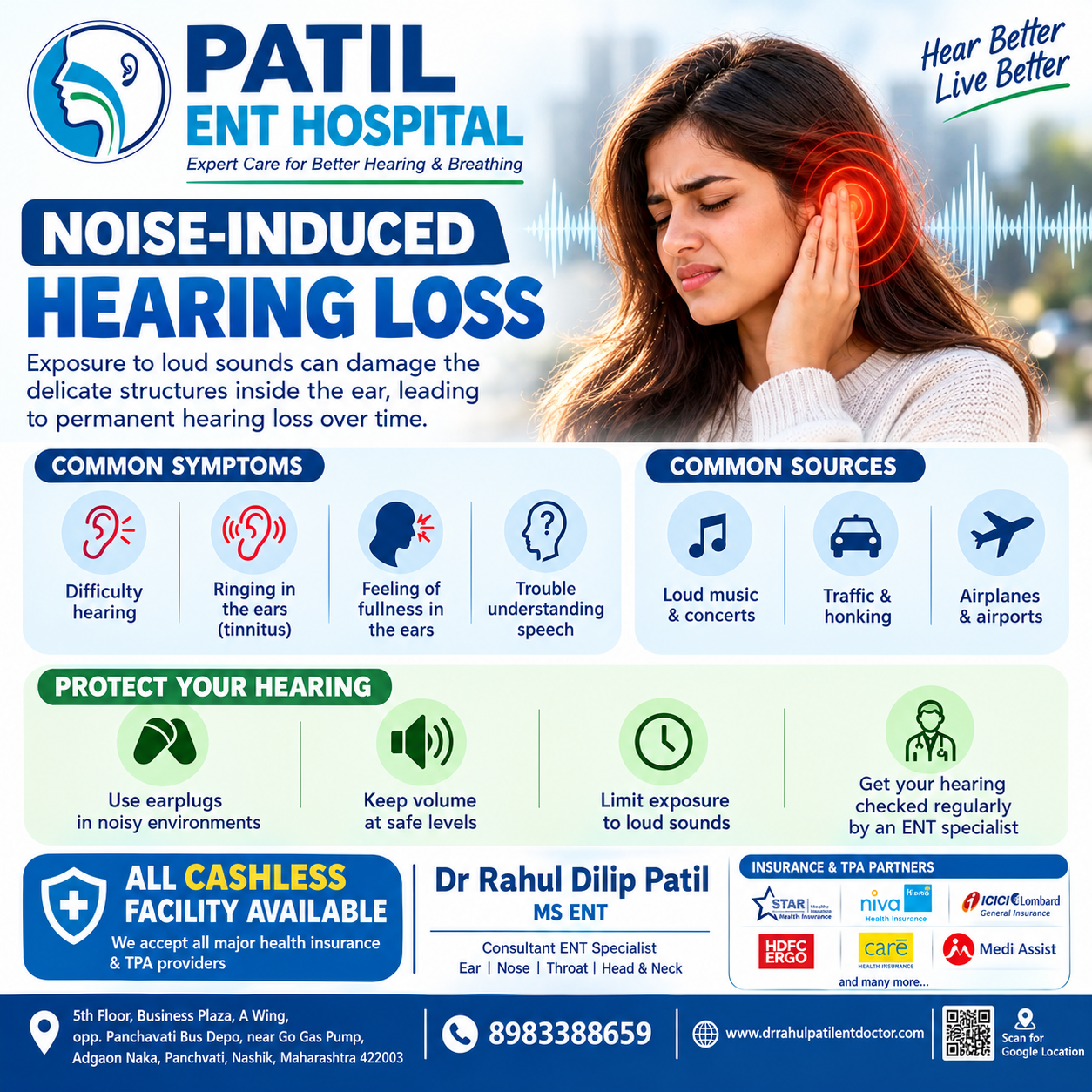
Noise-induced hearing loss (NIHL) is a type of hearing impairment caused by exposure to loud sounds, either suddenly or over a prolonged period. It can affect one or both ears and may develop gradually without obvious early symptoms. Damage to the delicate sensory hair cells in the inner ear can be permanent.
At Patil ENT Hospital, Nashik, patients experiencing hearing difficulty, ringing in the ears, or reduced hearing after loud-noise exposure can consult Dr. Rahul Dilip Patil, MS ENT, for assessment and guidance regarding appropriate treatment.
All Cashless Facility Available, subject to insurance policy coverage, network eligibility and insurer/TPA approval.
1. What Causes Noise-Induced Hearing Loss?
Common causes include:
- Occupational noise: Factories, construction sites, workshops and industrial machinery.
- Loud music: Headphones at high volume, concerts, DJs and loudspeakers.
- Sudden loud sounds: Firecrackers, explosions or gunshots.
- Repeated recreational exposure: Loud events, motorsports and other noisy activities.
- Prolonged headphone use: Listening at high volume for extended periods.
The risk depends on both the loudness of the sound and the duration and frequency of exposure.
2. Symptoms of Noise-Induced Hearing Loss
The symptoms of noise-induced hearing loss may develop gradually or occur suddenly after exposure to an extremely loud sound. Early recognition is important because further damage may be preventable.
CDC
+1

1. Reduced hearing
Difficulty hearing normal conversations, television, phone calls, or sounds from a distance.

2. Ringing in the ears (tinnitus)
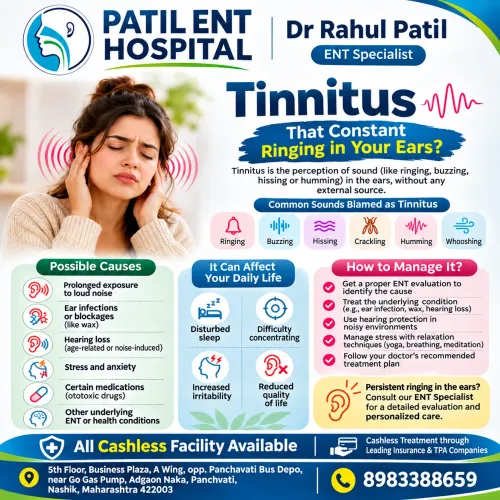
Ringing, buzzing, humming, or whistling sounds without an external source.

3. Difficulty understanding speech in noisy places
Conversations become difficult to follow in restaurants, markets, family gatherings, or crowded workplaces.

4. Muffled sounds and difficulty hearing high-pitched sounds
Speech may sound unclear, and sounds such as birds chirping or high-pitched beeps may become harder to hear.
Other symptoms may include:
- Frequently asking people to repeat themselves.
- Increasing the television or mobile phone volume.
- Temporary muffled hearing after a loud event.
- Increased sensitivity or discomfort around loud sounds.
- Difficulty identifying where sounds are coming from.
Important: Sudden hearing loss, particularly in one ear, needs urgent medical assessment. Do not assume it is simply due to noise exposure.
3. How Is Noise-Induced Hearing Loss Diagnosed?
At Patil ENT Hospital, an ENT assessment may include the following, depending on clinical need:
- Medical and noise-exposure history: Duration of exposure, type of noise, symptoms, and any associated ear problems.
- Ear examination: To check for earwax, infection, eardrum abnormalities, or other causes of hearing difficulty.
- Pure-tone audiometry (PTA): Measures hearing thresholds at different frequencies and helps identify the degree and pattern of hearing loss.
- Speech audiometry: Evaluates the ability to hear and understand spoken words.
- Tympanometry: May be used to assess middle-ear function when indicated.
- Additional tests: Otoacoustic emissions or other investigations may be recommended in selected cases.
An audiogram often shows greater hearing loss at higher frequencies, although the pattern varies from person to person. Other causes of hearing impairment must also be considered.
NIDCD
+1
4. Treatment for Noise-Induced Hearing Loss
Treatment depends on whether the hearing loss is temporary, sudden, or established and permanent.

A. Early ENT evaluation
If hearing changes after loud noise, seek medical evaluation promptly. Temporary symptoms can improve, but persistent symptoms may indicate inner-ear injury. Sudden hearing loss requires urgent assessment.

B. Hearing aids
Hearing aids may improve communication when permanent hearing loss affects everyday activities. Selection should be based on the audiogram and individual needs.

C. Hearing rehabilitation
Auditory rehabilitation, communication strategies, and assistive listening devices can help patients understand speech and participate more comfortably in daily life.

D. Preventing further hearing damage
Reduce exposure to loud noise, use properly fitted earplugs or earmuffs, and arrange hearing monitoring when regularly exposed to workplace noise.
Can noise-induced hearing loss be cured?
Permanent noise-induced hearing loss usually cannot be reversed with medicines or surgery. Hearing aids and rehabilitation can improve hearing function and communication. If hearing loss develops suddenly after a loud-noise exposure, a specialist may assess for acute inner-ear injury and consider time-sensitive treatment where appropriate. Do not self-medicate or delay consultation.
CDC
+1
5. Prevention and Precautions
The best approach is to prevent excessive noise exposure before permanent damage occurs.
CDC
+1
- Keep headphone and earphone volume low.
- Take regular breaks from listening.
- Avoid standing close to loudspeakers at concerts and events.
- Use suitable hearing protection in factories, workshops, and construction sites.
- Move away from loud machinery whenever possible.
- Follow workplace hearing conservation procedures.
- Arrange hearing tests if you work in a noisy environment.
- Never insert objects into the ear to try to treat hearing loss.
- Seek medical advice for persistent tinnitus or any change in hearing.
6. Complications of Untreated Hearing Loss
Persistent hearing loss may affect:
- Communication with family and colleagues.
- Work performance and workplace safety.
- Social activities and quality of life.
- Recognition of alarms, traffic sounds, and other warning signals.
- Emotional well-being due to communication difficulties.
Early assessment can help identify the degree of hearing loss and appropriate rehabilitation needs.
7. Noise-Induced Hearing Loss Treatment at Patil ENT Hospital

Patil ENT Hospital, Nashik
Dr. Rahul Dilip Patil, MS ENT
Consultation for hearing difficulty, tinnitus, and suspected noise-induced hearing loss, with evaluation and guidance on suitable treatment and hearing protection.
All Cashless Facility Available
Subject to insurance policy coverage, network eligibility, and insurer/TPA authorization.
Hospital address
5th Floor, Business Plaza, A Wing, Opp. Panchavati Bus Depot, Near Go Gas Pump, Adgaon Naka, Panchavati, Nashik, Maharashtra – 422003.
Website
Keywords