Learn how to prevent tinnitus and protect your hearing. Discover causes, precautions and hearing protection tips at Patil ENT Hospital, Nashik. Consult Dr. Rahul Patil, MS ENT. All cashless facilities available, subject to insurance approval.
Tinnitus Prevention – Tips to Protect Your Hearing | Patil ENT Hospital, Nashik
Earplugs Guide: Types, Materials, Fit, and Best Uses
Custom made and fitted earplugs, earphone tips and hearing protection.
2. What Is Tinnitus?
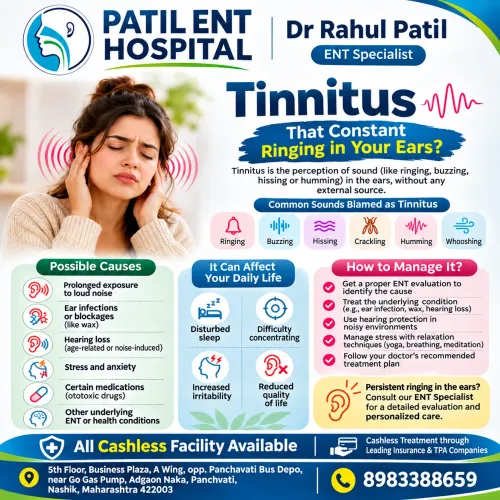
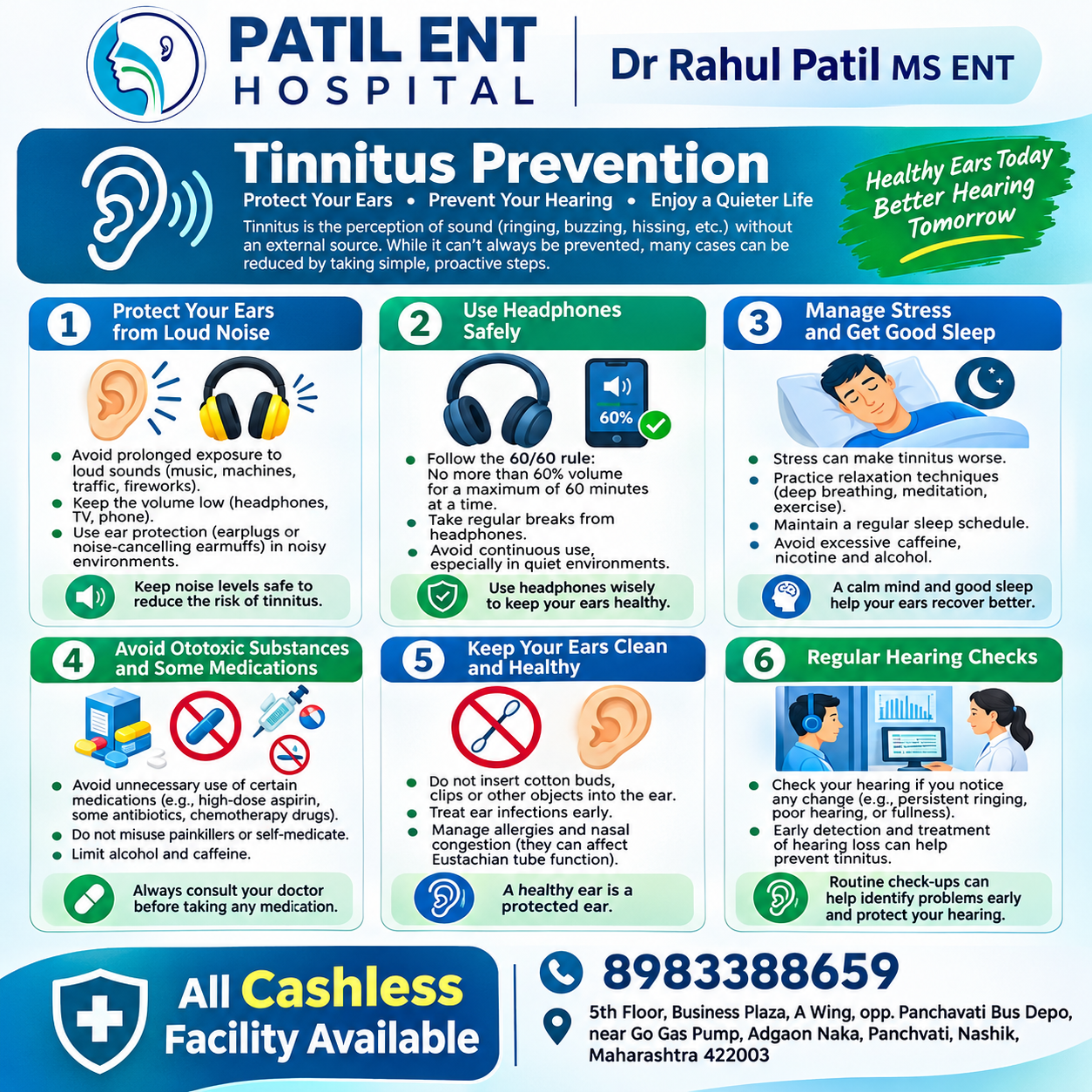
Tinnitus is the perception of sound in one or both ears without an external source. Patients commonly describe it as ringing, buzzing, humming, whistling, hissing or roaring sounds.
Tinnitus may be temporary or persistent. It can occur due to exposure to loud noise, age-related hearing loss, ear infections, earwax blockage and other medical conditions.
Although not all cases of tinnitus can be prevented, taking proper precautions can reduce the risk of noise-induced tinnitus and protect hearing health.
At Patil ENT Hospital, Nashik, patients can consult an ENT specialist for tinnitus evaluation, hearing assessment and preventive guidance.
3. Common Causes of Tinnitus
Understanding the causes of tinnitus is important for prevention.
- Exposure to loud noise: Listening to loud music through headphones or attending loud concerts.
- Age-related hearing loss: Changes in the inner ear with increasing age.
- Earwax accumulation: Excessive earwax can block the ear canal.
- Ear infections: Middle-ear and outer-ear infections.
- Noise-induced hearing damage: Repeated exposure to workplace or environmental noise.
- Certain medications: Some medicines may cause or worsen tinnitus.
- Otosclerosis: Abnormal bone growth in the middle ear.
- Meniere's disease: An inner-ear disorder associated with tinnitus, hearing loss and vertigo.
- Head or neck injuries: Trauma can sometimes contribute to tinnitus.
- Vascular conditions: Certain blood vessel abnormalities can produce pulsatile tinnitus.
4. How to Prevent Tinnitus
Decibel Defense News Updates - #1 Rated Safety Earmuffs
1. Avoid Exposure to Loud Noise
- Avoid prolonged exposure to loud music.
- Maintain a safe distance from loudspeakers.
- Avoid unnecessary exposure to fireworks and loud machinery.
- Use hearing protection in noisy environments.
2. Follow Safe Headphone Practices
Why Audio Quality Still Makes or Breaks Your Video Content
- Keep headphone volume at a comfortable level.
- Avoid listening to music at maximum volume.
- Take regular breaks while using headphones.
- Prefer noise-cancelling headphones in noisy surroundings so that you do not need to increase the volume.
- Stop listening if you experience ringing or discomfort.
3. Use Ear Protection
- Wear earplugs or earmuffs in noisy workplaces.
- Use appropriate hearing protection during concerts and recreational activities.
- Follow workplace hearing safety guidelines.
- Get regular hearing assessments if exposed to occupational noise.
4. Maintain Proper Ear Hygiene
Ear, nose and throat | St Stephen's Hospital
- Never insert cotton buds, pins or sharp objects into the ear.
- Avoid excessive ear cleaning.
- Consult an ENT specialist for impacted earwax.
- Do not use ear drops without medical advice when you have ear pain or suspected eardrum perforation.
- Seek treatment for recurrent ear infections.
5. Maintain a Healthy Lifestyle
- Maintain a balanced diet.
- Exercise regularly.
- Maintain adequate sleep.
- Manage stress and anxiety.
- Avoid smoking.
- Limit excessive caffeine if it worsens your tinnitus.
- Maintain good general health.
6. Take Medicines Carefully
Certain medicines can cause or worsen tinnitus in some individuals.
- Avoid self-medication.
- Inform your doctor if you develop ringing in the ears after starting a new medicine.
- Do not discontinue prescribed medicines without consulting your doctor.
- Follow the prescribed dosage.
7. Control Existing Medical Conditions
Certain health conditions may be associated with tinnitus.
- Maintain healthy blood pressure.
- Manage diabetes appropriately.
- Seek evaluation for thyroid disorders when indicated.
- Consult your doctor for persistent hearing problems or dizziness.
5. Dietary and Lifestyle Recommendations for Tinnitus Prevention
There is no specific diet proven to prevent all types of tinnitus. However, healthy lifestyle habits support general health and may help some people manage symptoms.
Recommendation
Benefit
Balanced diet
Supports overall health
Adequate hydration
Maintains normal body function
Regular exercise
Supports cardiovascular health
Proper sleep
Helps reduce fatigue and stress
Stress management
May reduce tinnitus-related distress
Avoid smoking
Supports vascular and hearing health
Limit excessive caffeine if it triggers symptoms
May help individual symptom management
6. Who Is at Higher Risk of Developing Tinnitus?
Certain individuals may have a higher risk of tinnitus:
- Factory and industrial workers exposed to loud machinery.
- Musicians and sound technicians.
- People frequently using headphones at high volume.
- Individuals exposed to loud traffic and construction noise.
- Older adults with age-related hearing loss.
- Patients with recurrent ear infections.
- Individuals with a history of head or ear injury.
People in high-risk occupations should undergo regular hearing assessments and use appropriate hearing protection.
7. When Should You Consult an ENT Specialist?
Consult an ENT specialist if you experience:
- Persistent ringing or buzzing in the ears.
- Reduced hearing ability.
- Ear fullness or pressure.
- Tinnitus in one ear.
- Tinnitus associated with vertigo.
- Pulsating sounds matching your heartbeat.
- Tinnitus affecting sleep or concentration.
Important
Sudden hearing loss associated with tinnitus requires urgent medical assessment, ideally on the same day. Do not wait for symptoms to resolve on their own.
8. Importance of Regular Hearing Check-ups
Regular hearing assessments help identify hearing problems at an early stage, especially in people exposed to loud noise.
An ENT specialist may recommend:
- Pure Tone Audiometry (PTA).
- Tympanometry.
- Otoscopic examination.
- Otoacoustic Emissions (OAE), when indicated.
- Further investigations depending on symptoms.
Early identification of hearing loss and appropriate hearing protection can help prevent further noise-related damage.
9. Tinnitus Prevention and ENT Consultation at Patil ENT Hospital, Nashik
ЛОР-врач: лечение отита и аденоидов в ZdrowoMedical
At Patil ENT Hospital, we provide ENT consultation and evaluation for ear and hearing-related problems.
Consult Dr. Rahul Dilip Patil, MS ENT, for assessment and guidance regarding:
- Tinnitus (ringing in the ears).
- Hearing loss.
- Noise-induced hearing loss.
- Earwax blockage.
- Ear infections.
- Otosclerosis.
- Vertigo and dizziness.
- Eardrum perforation.
PATIL ENT HOSPITAL
Dr. Rahul Dilip Patil, MS ENT
Address
5th Floor, Business Plaza, A Wing, Opp. Panchavati Bus Depot, Near Go Gas Pump, Adgaon Naka, Panchvati, Nashik, Maharashtra – 422003.
Mobile: 8983388659
ALL CASHLESS FACILITY AVAILABLE
Cashless insurance and TPA facilities available, subject to policy terms, network eligibility and insurer/TPA approval.
Website: www.drrahulpatilentdoctor.com
Keywords