Experiencing hoarseness, rough or weak voice? Learn about causes, symptoms, diagnosis and treatment of voice disorders at Patil ENT Hospital, Nashik. Consult Dr. Rahul Patil, MS ENT. All cashless facilities available, subject to insurance approval.
Hoarseness of Voice – Causes, Symptoms, Diagnosis & Treatment | Patil ENT Hospital, Nashik
I’ve recovered from a cold but I still have a hoarse voice. What should I do? - Yahoo News Australia
Laringoscopia a fibre ottiche | Poliambulatorio San Martino
2. What Is Hoarseness of Voice?
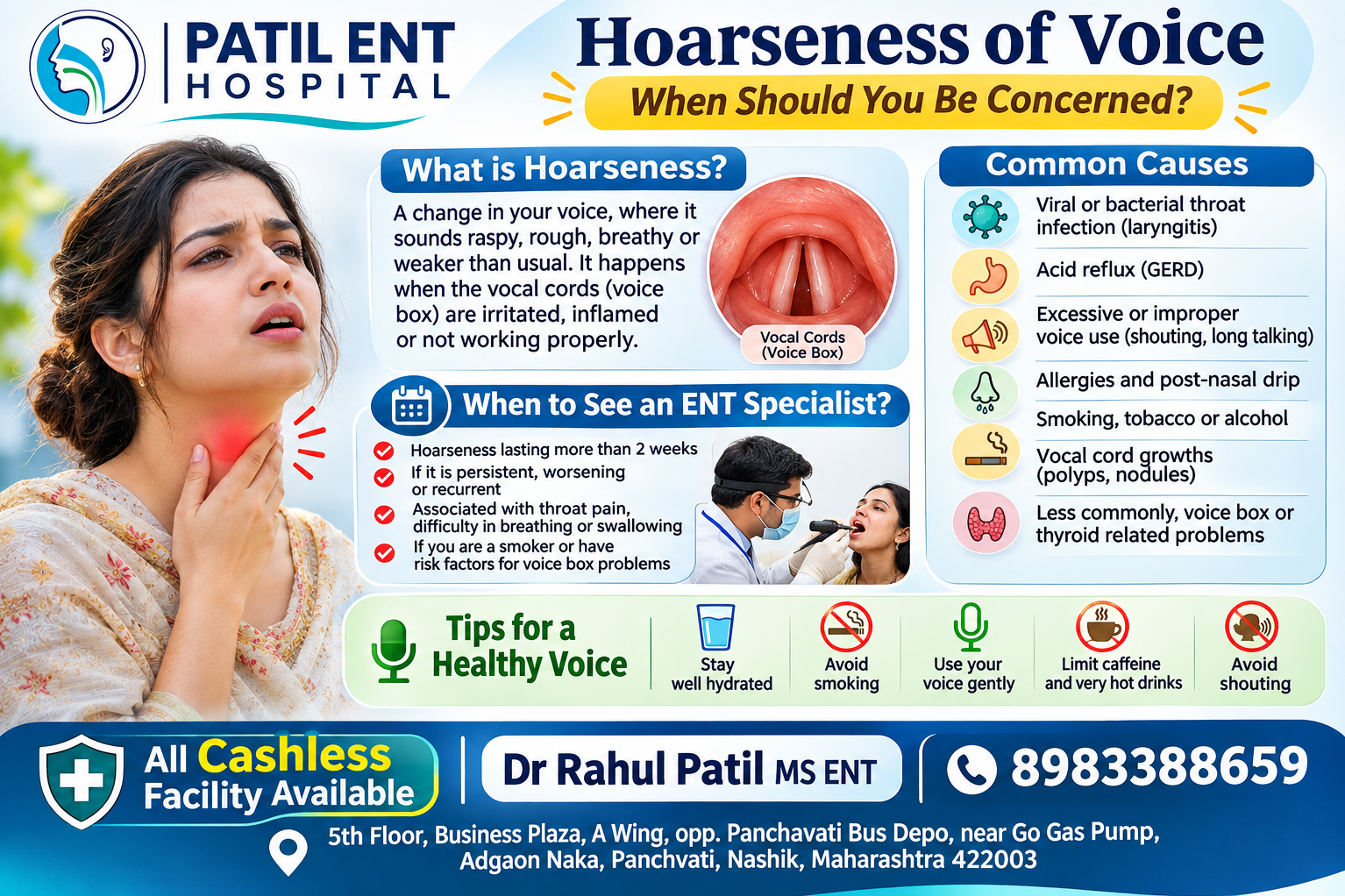
Hoarseness of voice is a condition in which the voice becomes rough, weak, breathy, strained or unusually low in pitch. It occurs when the normal vibration of the vocal cords (vocal folds) is affected.
The vocal cords are two small bands of tissue located inside the larynx (voice box). They vibrate when air passes through them, producing sound.
Hoarseness may develop suddenly or gradually and can be temporary or persistent.
Common voice changes include:
- Rough or harsh voice.
- Weak or low-volume voice.
- Breathy voice.
- Difficulty speaking loudly.
- Voice breaks while talking.
- Loss of voice (aphonia).
- Pain or discomfort while speaking.
At Patil ENT Hospital, Nashik, patients can undergo ENT evaluation to identify the underlying cause of hoarseness and receive appropriate treatment.
3. Causes of Hoarseness of Voice
Several conditions can affect the vocal cords and cause hoarseness.
1. Acute Laryngitis
Inflammation of the vocal cords, commonly due to viral infections, excessive voice use or irritation.
2. Chronic Laryngitis
Long-standing inflammation caused by smoking, acid reflux, environmental irritants or repeated vocal strain.
3. Vocal Cord Nodules
Small benign growths that commonly develop due to repeated vocal strain or incorrect voice use.
4. Vocal Cord Polyp
A benign swelling or lesion on the vocal cord that may cause persistent hoarseness.
5. Gastroesophageal Reflux Disease (GERD)
Acid reflux may irritate the throat and larynx, sometimes contributing to voice changes.
6. Vocal Cord Paralysis
Reduced or absent movement of one or both vocal cords due to nerve-related problems.
7. Smoking and Tobacco Use
Smoking can irritate and damage the vocal cord lining and increase the risk of serious laryngeal disease, including cancer.
8. Allergies and Upper Respiratory Infections
Allergies, cough and throat infections may cause temporary voice changes.
9. Thyroid and Neck Surgery
Injury or dysfunction of nerves supplying the vocal cords can sometimes occur following neck or thyroid surgery.
10. Laryngeal Growths
Benign or malignant lesions of the larynx can cause persistent hoarseness and require proper evaluation.
4. Symptoms of Hoarseness of Voice
Patients may experience one or more of the following:
- Change in voice quality.
- Rough, raspy or breathy voice.
- Weak voice or reduced volume.
- Difficulty speaking for long periods.
- Voice fatigue.
- Frequent throat clearing.
- Dryness or irritation in the throat.
- Pain or discomfort while speaking.
- Difficulty producing high-pitched sounds.
- Complete loss of voice in severe cases.
Some patients may also experience difficulty swallowing, breathing problems or a sensation of something stuck in the throat.
5. Diagnosis of Hoarseness of Voice
Proper diagnosis is essential to identify the underlying cause.
At an ENT consultation, the following assessments may be recommended.
Thankful Voice Center Patient Shares Story to Help Others | Voice Center Patient Center
1. Detailed Medical History
The doctor evaluates:
- Duration of hoarseness.
- History of smoking or tobacco use.
- Occupational voice use.
- History of acid reflux.
- Recent respiratory infections.
- Previous thyroid or neck surgery.
2. Clinical ENT Examination
Examination of the nose, mouth, throat and neck to identify possible abnormalities.
3. Indirect Laryngoscopy
Examination of the larynx and vocal cords using a suitable mirror or scope.
4. Flexible Fibreoptic Laryngoscopy
A thin flexible endoscope is passed through the nose to visualize the vocal cords and assess their movement.
5. Video Laryngoscopy
Provides detailed visualization of the vocal cords and helps identify lesions, inflammation and other structural abnormalities.
6. Videostroboscopy
A specialized examination that evaluates vocal cord vibration and may help diagnose subtle vocal cord abnormalities.
7. Additional Investigations
Imaging, biopsy or other tests may be advised when a suspicious lesion, vocal cord paralysis or other underlying condition is identified.
6. Treatment of Hoarseness of Voice
Treatment depends on the underlying cause, severity and duration of symptoms.
Una tendencia viral sugiere beber agua caliente en ayunas: qué dice la ciencia - Infobae
1. Voice Rest and Hydration
- Avoid excessive talking.
- Drink adequate water.
- Avoid shouting and whispering.
- Allow the voice to recover.
- Avoid repeated throat clearing.
Best ENT Doctor in Greater Noida Extension - ENT Hospital
2. Medical Treatment
Depending on the diagnosis, treatment may include medication for infections, allergies or acid reflux. Antibiotics and steroids are not routinely required for every case of hoarseness.
Speech Therapy Rehabilitation Manila - SLP Voice & Swallowing Treatment | Activait
3. Voice Therapy
Speech and language therapy can help patients with vocal cord nodules, muscle tension dysphonia and inappropriate voice use.
4. Surgical Treatment
Selected patients with vocal cord polyps, cysts or suspicious lesions may require microlaryngeal surgery or biopsy, depending on the diagnosis.
7. Prevention of Hoarseness of Voice
Hydration and vocal health: proven strategies for stronger voices - TMRG Solutions
Follow these precautions to maintain healthy vocal cords:
- Drink sufficient water throughout the day.
- Avoid shouting and excessive speaking.
- Avoid smoking and tobacco products.
- Avoid unnecessary throat clearing.
- Take regular breaks during prolonged speaking.
- Avoid exposure to dust, smoke and chemical irritants.
- Manage acid reflux if present.
- Avoid self-medication for persistent hoarseness.
- Use proper voice techniques when speaking or singing professionally.
- Seek ENT consultation for persistent changes in voice.
8. When Should You Consult an ENT Specialist?
Do not ignore persistent hoarseness.
Consult an ENT specialist if you experience:
- Hoarseness lasting more than 2–3 weeks.
- Repeated episodes of voice loss.
- Difficulty speaking or producing sound.
- Pain while speaking or swallowing.
- A lump or swelling in the neck.
- Unexplained weight loss with voice changes.
- Persistent throat irritation.
- History of smoking or tobacco use with a change in voice.
Important medical warning
Breathing difficulty or noisy breathing requires emergency medical assessment. Persistent unexplained hoarseness, particularly in smokers or tobacco users, requires prompt laryngeal examination to rule out serious conditions.
9. Hoarseness of Voice Treatment at Patil ENT Hospital, Nashik
Search Specialties in China | Medical Tourism China
At Patil ENT Hospital, Nashik, patients can consult Dr. Rahul Dilip Patil, MS ENT, for evaluation and management of various ENT and voice-related conditions.
Our ENT consultation covers:
- Hoarseness of voice.
- Acute and chronic laryngitis.
- Vocal cord nodules.
- Vocal cord polyps.
- Vocal cord paralysis.
- Voice disorders.
- Throat infections.
- Acid reflux-related throat symptoms.
- Laryngeal lesions and abnormalities.
PATIL ENT HOSPITAL
Dr. Rahul Dilip Patil, MS ENT
ENT Specialist
Hospital Address
5th Floor, Business Plaza, A Wing, Opp. Panchavati Bus Depot, Near Go Gas Pump, Adgaon Naka, Panchvati, Nashik, Maharashtra – 422003.
Mobile: 8983388659
ALL CASHLESS FACILITY AVAILABLE
Cashless insurance and TPA facilities available, subject to policy coverage, network eligibility and insurer/TPA approval.
Website: www.drrahulpatilentdoctor.com
Keywords