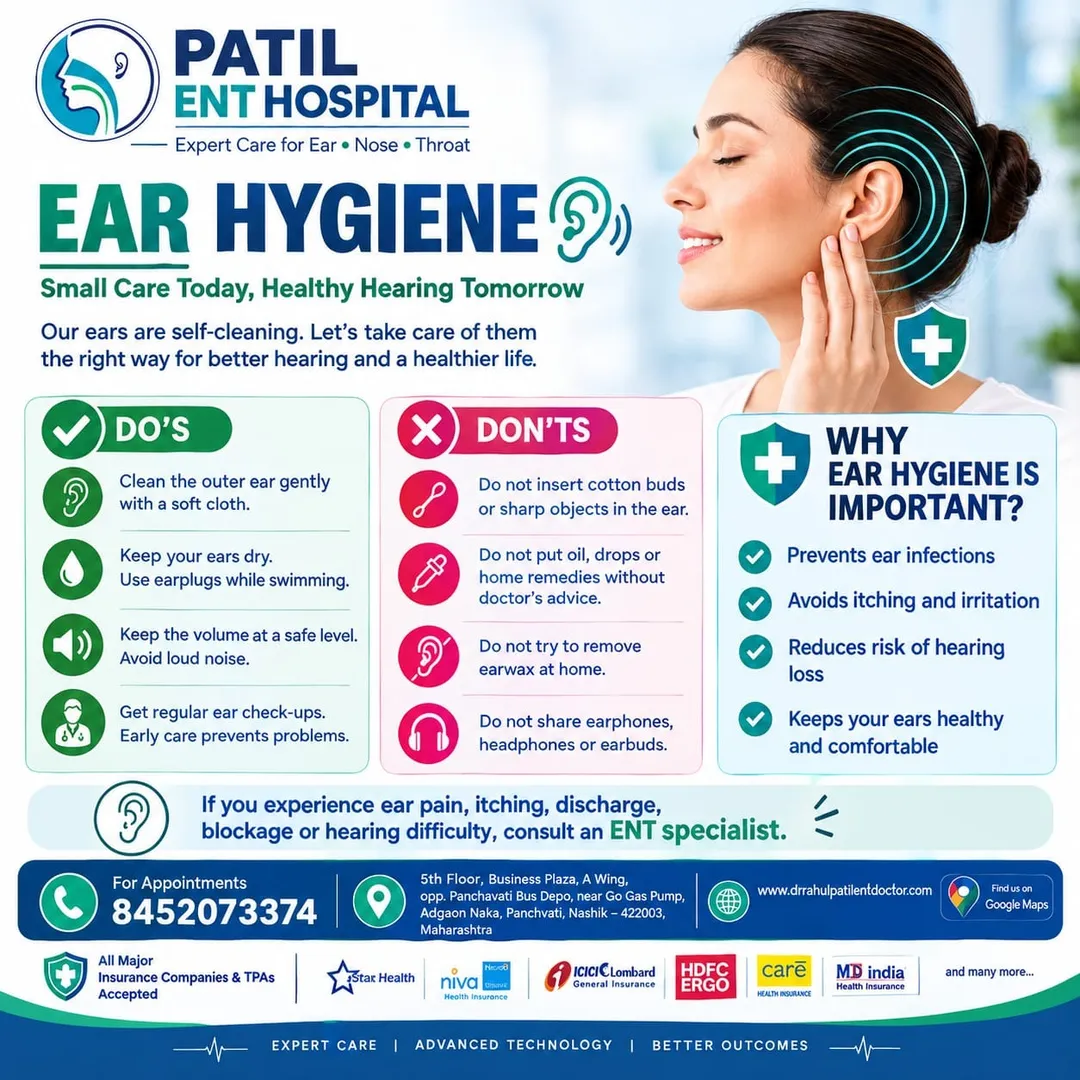
Learn proper ear hygiene, safe ear cleaning methods, earwax prevention and common mistakes to avoid. Consult Patil ENT Hospital, Nashik for professional ear and ENT care. All Cashless Facility Available.
Ear Hygiene – Detailed Patient Information
Ear hygiene means keeping the outer ear clean and the ear canal healthy without unnecessarily disturbing natural earwax. Earwax (cerumen) is protective: it lubricates the ear canal, traps dust and particles, and helps inhibit microbial growth. Routine deep cleaning is generally not required. (AAO-HNS)
Common mistakes that can harm the ear
- ❌ Putting cotton buds/Q-tips inside the ear canal
- ❌ Using hairpins, matchsticks, keys or other objects
- ❌ Trying to remove deeply impacted wax at home
- ❌ Frequent or excessive ear cleaning
- ❌ Using ear candles
- ❌ Irrigating the ear when there may be a perforated eardrum or previous ear surgery without medical advice
Cotton buds can push wax deeper and may injure the ear canal or eardrum. Excessive cleaning can also irritate the canal and increase the risk of infection. (AAO-HNS)
Proper ear hygiene
1. Clean only the outer ear
Gently wipe the visible outer ear with a clean, soft cloth. There is usually no need to insert anything into the ear canal.
2. Allow natural earwax to work
Normal earwax generally migrates outward naturally. Earwax should not automatically be considered something that needs to be removed.
3. Keep ears dry
After bathing or swimming, gently dry the outer ear. Keeping the ear canal excessively wet can contribute to problems such as swimmer's ear. (Mayo Clinic News Network)
4. Be careful with headphones and hearing aids
Keep earphones, hearing aids and their contact surfaces clean according to the manufacturer's instructions. People who use hearing aids may be more prone to wax accumulation and may benefit from periodic professional ear examination. (AAO-HNS)
5. Treat excessive wax safely
If wax causes blockage, reduced hearing, fullness or other symptoms, an ENT specialist can examine the ear and determine whether wax removal is required. Depending on the ear condition, removal may involve appropriate softening agents, irrigation or professional physical removal. (Mayo Clinic)
When NOT to clean the ear yourself
Professional assessment is particularly important if you have:
- Ear pain
- Ear discharge
- Bleeding
- Sudden or significant hearing reduction
- Dizziness/vertigo
- Persistent ringing in the ear
- Suspected eardrum perforation
- Previous ear surgery
- Grommet/ear tube
- Recurrent ear infections
The AAO-HNS specifically advises against irrigation or wax-softening drops in people with previous ear surgery or a perforated eardrum unless cleared by an ENT specialist. (AAO-HNS)
Ear hygiene in children
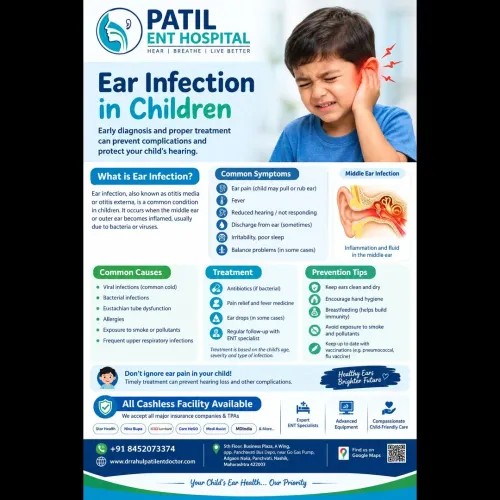
Children should not have objects or cotton buds inserted into their ears. Wax can sometimes block examination of the eardrum and may be associated with ear discomfort, fullness, hearing difficulty or discharge. (Social Driver Elementor Base Install)
When to consult an ENT specialist
If you feel that “something is stuck in your ear,” have recurrent wax buildup, blocked hearing, ear pain, discharge or persistent itching, an ENT examination can determine whether the problem is wax or another ear condition. Earache or hearing loss should not automatically be assumed to be caused by wax. (Mayo Clinic News Network)
All Cashless Facility Available
Address:
5th Floor, Business Plaza, A Wing, Opp. Panchavati Bus Depot, Near Go Gas Pump, Adgaon Naka, Panchvati, Nashik – 422003, Maharashtra
Mobile: 8983388659
Website: www.drrahulpatilentdoctor.com
This educational information does not replace an examination by an ENT specialist.
Keywords