Chronic Adenoiditis in Children – Signs, Symptoms & Treatment: Learn about chronic adenoiditis, its symptoms, diagnosis, medical treatment and when adenoidectomy may be required. Evidence-based information on nasal obstruction, mouth breathing, snoring, recurrent infections and associated ear problems. Patil ENT Hospital, Nashik provides ENT consultation, endoscopic evaluation and treatment with **all cashless facilities available
Chronic Adenoiditis – Signs, Symptoms & Treatment
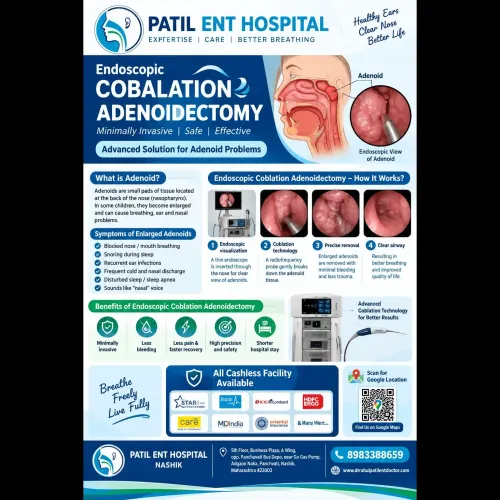
What is Chronic Adenoiditis?
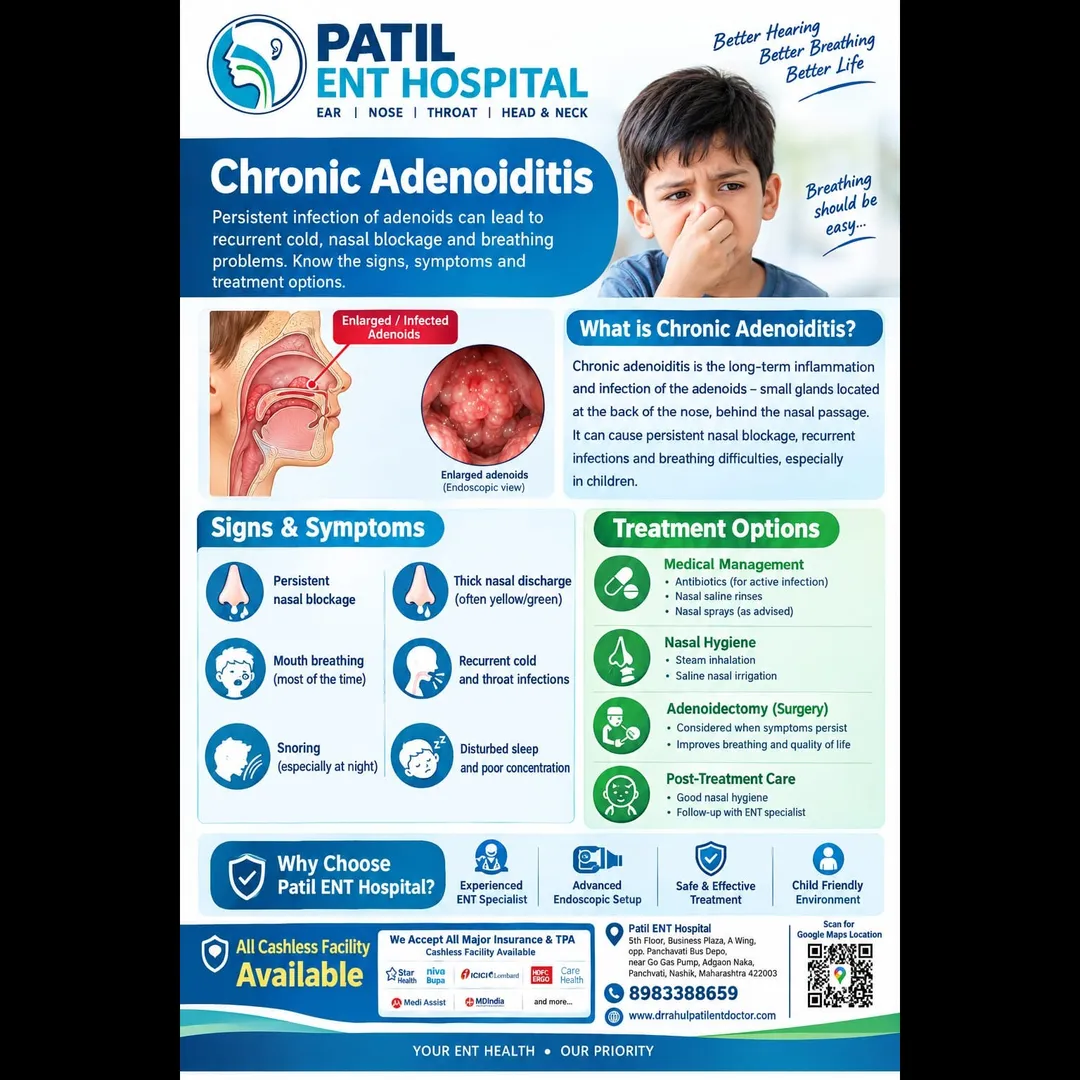
Chronic adenoiditis is persistent inflammation/infection of the adenoid tissue located behind the nose, in the nasopharynx. It can coexist with adenoid hypertrophy (enlarged adenoids) and may cause prolonged nasal obstruction, mouth breathing, snoring, recurrent nasal/throat symptoms and Eustachian-tube dysfunction. (PubMed)
Signs & Symptoms
- 👃 Persistent blocked nose / nasal obstruction
- 👄 Mouth breathing, especially during sleep
- 😴 Snoring
- 💤 Disturbed or restless sleep
- 🤧 Recurrent nasal discharge
- 👃 Post-nasal drip
- 🗣️ Nasal or “blocked nose” voice
- 😮💨 Difficulty breathing through the nose
- 🤒 Recurrent throat or upper-respiratory infections
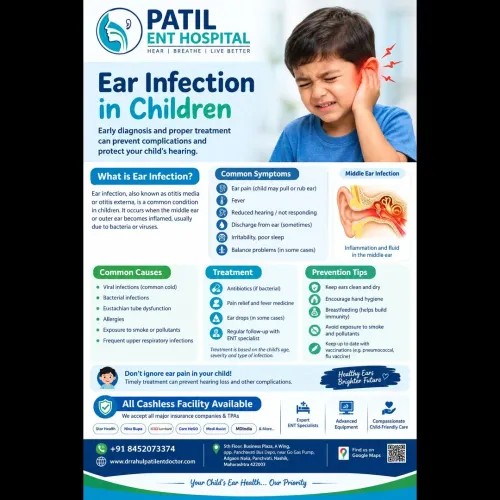
- 👂 Recurrent ear infections or Eustachian tube dysfunction
- 🔊 Hearing difficulty due to associated middle-ear fluid
- 😴 Daytime tiredness or poor concentration when sleep is significantly disturbed
Chronic adenoid inflammation can affect adjacent areas including the nose, sinuses, throat and middle ear. (PubMed)
Diagnosis
An ENT specialist may evaluate the child with:
- Detailed history and clinical examination
- Nasal endoscopy / nasopharyngoscopy to assess adenoid size and inflammation
- Ear examination and hearing assessment when indicated
- Assessment for sleep-disordered breathing or obstructive sleep apnea when clinically suspected
A systematic review found that adenoid hypertrophy confirmed by nasoendoscopy is common in children, although prevalence varies substantially between populations and study methods. (PubMed)
Treatment
Treatment depends on the severity of symptoms, degree of obstruction, recurrent infections and associated ear/sleep problems.
1. Medical treatment
Depending on the clinical cause, the ENT specialist may consider:
- Saline nasal irrigation/saline spray
- Appropriate treatment of allergic rhinitis when present
- Intranasal corticosteroids in selected children
- Antibiotics only when a bacterial infection is suspected/diagnosed and treatment is clinically appropriate
Recent systematic-review evidence involving 30 studies and 2,301 children found that intranasal corticosteroids reduced adenoid size and clinical symptoms and were associated with a lower rate of adenoidectomy compared with controls. (PubMed)
2. Adenoidectomy
Adenoidectomy may be considered when there is significant persistent obstruction, sleep-disordered breathing, recurrent problems, associated Eustachian-tube/middle-ear disease, or inadequate response to appropriate conservative treatment. (PubMed)
A systematic review/meta-analysis found that adenoidectomy consistently reduced nasal resistance and increased nasal airflow in the pediatric studies evaluated. (PubMed
🛡️ PATIL ENT HOSPITAL
ALL CASHLESS FACILITY AVAILABLE
ENT Consultation | Pediatric ENT | Endoscopic Evaluation | Adenoid Surgery
📍 5th Floor, Business Plaza, A Wing, Opp. Panchavati Bus Depot, Near Go Gas Pump, Adgaon Naka, Panchvati, Nashik – 422003, Maharashtra
📞 8983388659
🌐 drrahulpatilentdoctor.com
For educational information only. Diagnosis and treatment should be decided by a qualified ENT specialist.
Keywords