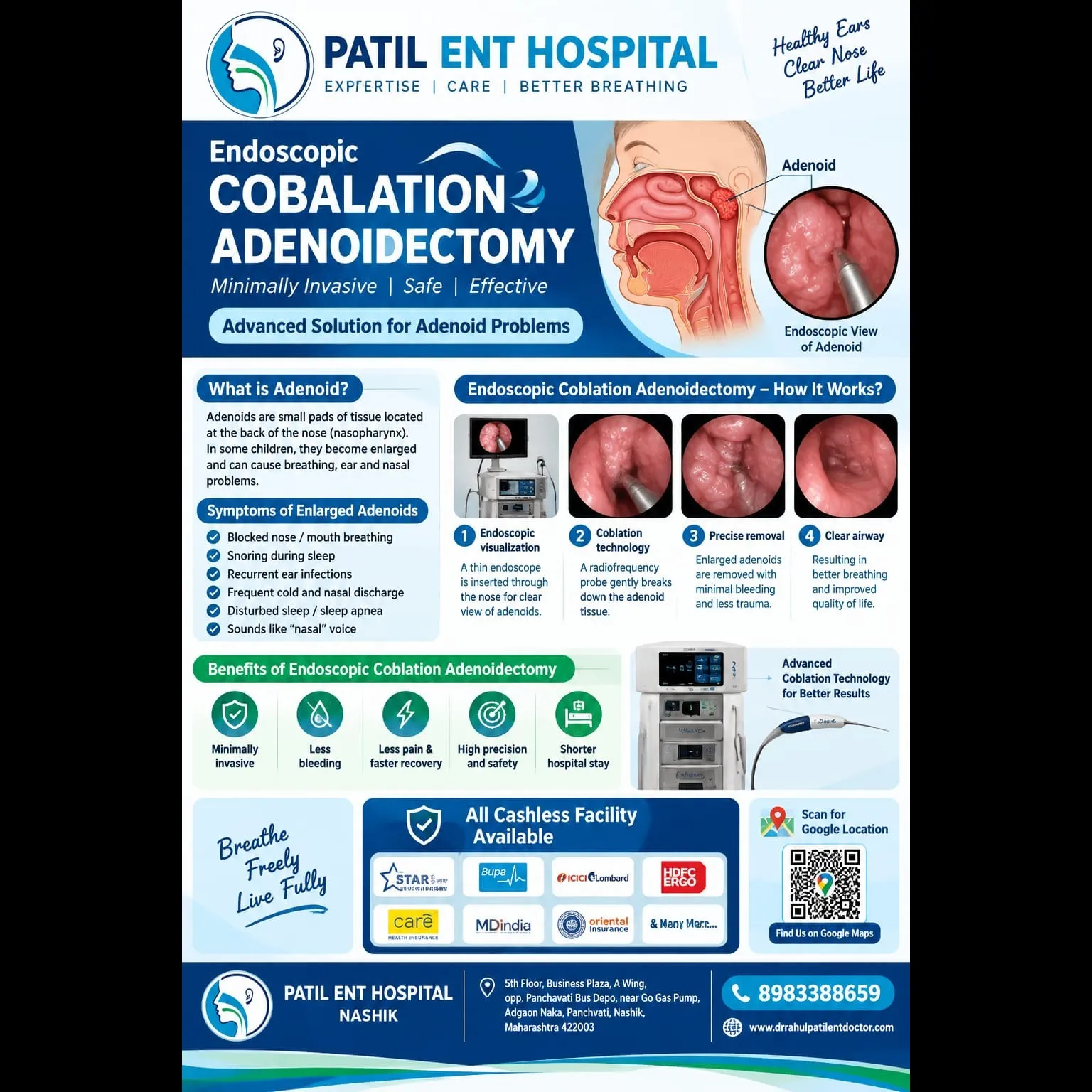
Coblation Adenoidectomy is an advanced technique for removing enlarged or chronically infected adenoids. Learn about indications, symptoms, procedure, advantages, recovery and possible risks. At Patil ENT Hospital, Nashik, pediatric ENT evaluation and adenoid surgery are provided with all cashless facilities available.
Coblation Adenoidectomy – Detailed Information
What is Coblation Adenoidectomy?
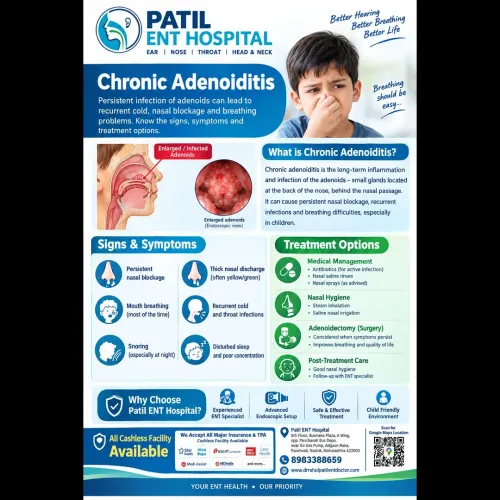
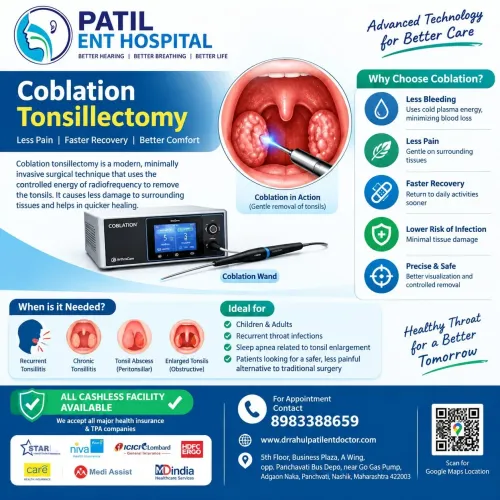
Coblation adenoidectomy is an endoscopic surgical technique used to remove enlarged or chronically infected adenoid tissue. It uses radiofrequency energy in a controlled plasma field to remove tissue at relatively low temperatures compared with conventional electrosurgical techniques.
It may be considered in children with significant adenoid hypertrophy, chronic adenoiditis, persistent nasal obstruction, mouth breathing, snoring, sleep-disordered breathing, recurrent adenoid-related problems, or associated Eustachian-tube/middle-ear problems, when surgery is clinically indicated.
Common Symptoms of Enlarged/Infected Adenoids
- Persistent nasal blockage
- Mouth breathing
- Snoring
- Restless or disturbed sleep
- Sleep-disordered breathing
- Recurrent nasal discharge
- Post-nasal drip
- Nasal-sounding voice
- Recurrent throat or upper-airway infections
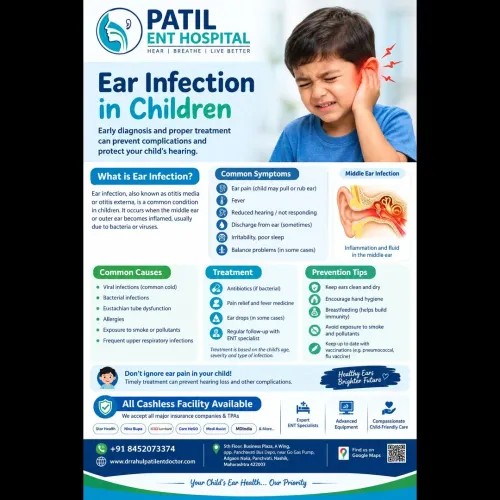
- Recurrent ear infections
- Eustachian tube dysfunction
- Conductive hearing problems from middle-ear fluid
Advantages of Coblation Adenoidectomy
- Controlled tissue removal
- Relatively low-temperature tissue ablation compared with conventional electrocautery
- Endoscopic visualization can help the surgeon assess the adenoid tissue directly
- Precise removal of obstructing tissue
- Can improve nasal airflow when enlarged adenoids are causing obstruction
- May help relieve mouth breathing and snoring caused by adenoid obstruction
- May be performed as a day-care procedure in appropriately selected patients
How is the Procedure Performed?
- The child is evaluated by an ENT specialist.
- Surgery is performed under general anesthesia.
- The adenoid tissue is visualized, commonly using an endoscope.
- The Coblation wand is used to remove/ablate the obstructing adenoid tissue.
- Hemostasis is achieved during the procedure.
- The nasopharynx is inspected to assess the completeness of tissue removal and bleeding control.
- The child is monitored during recovery and discharged according to the surgeon's assessment.
When May Adenoidectomy Be Recommended?
Adenoidectomy may be considered when enlarged or chronically inflamed adenoids are associated with:
- Persistent nasal obstruction
- Significant mouth breathing
- Sleep-disordered breathing
- Obstructive sleep apnea
- Recurrent or persistent adenoid-related symptoms
- Recurrent otitis media or persistent middle-ear effusion in selected children
- Eustachian-tube dysfunction associated with adenoid disease
- Failure of appropriate medical management
The decision should be individualized based on the child's symptoms, examination and ENT findings.
Recovery
Most children recover relatively quickly. Temporary symptoms such as sore throat, nasal congestion, bad breath or mild discomfort can occur after surgery. Adequate fluids, appropriate diet and prescribed pain relief are generally advised. The treating ENT surgeon should provide individualized postoperative instructions.
Possible Risks
As with any surgery, adenoidectomy has potential risks, although serious complications are uncommon. These can include:
- Bleeding
- Infection
- Throat or nasal discomfort
- Temporary voice changes
- Nasal symptoms
- Residual or recurrent adenoid tissue
- Anesthetic-related complications
Urgent medical assessment is required for significant bleeding, breathing difficulty, dehydration or other concerning postoperative symptoms.
PATIL ENT HOSPITAL
5th Floor, Business Plaza, A Wing, Opp. Panchavati Bus Depot, Near Go Gas Pump, Adgaon Naka, Panchvati, Nashik – 422003, Maharashtra
📞 8983388659
🌐 drrahulpatilentdoctor.com
All Cashless Facility Available
Keywords