Learn about Coblation Tonsillectomy, its advantages, postoperative recovery, pain, bleeding, indications and evidence-based outcomes at Patil ENT Hospital, Nashik.
COBLATION TONSILLECTOMY
Advanced Tonsil Surgery for Reduced Tissue Trauma and Comfortable Recovery
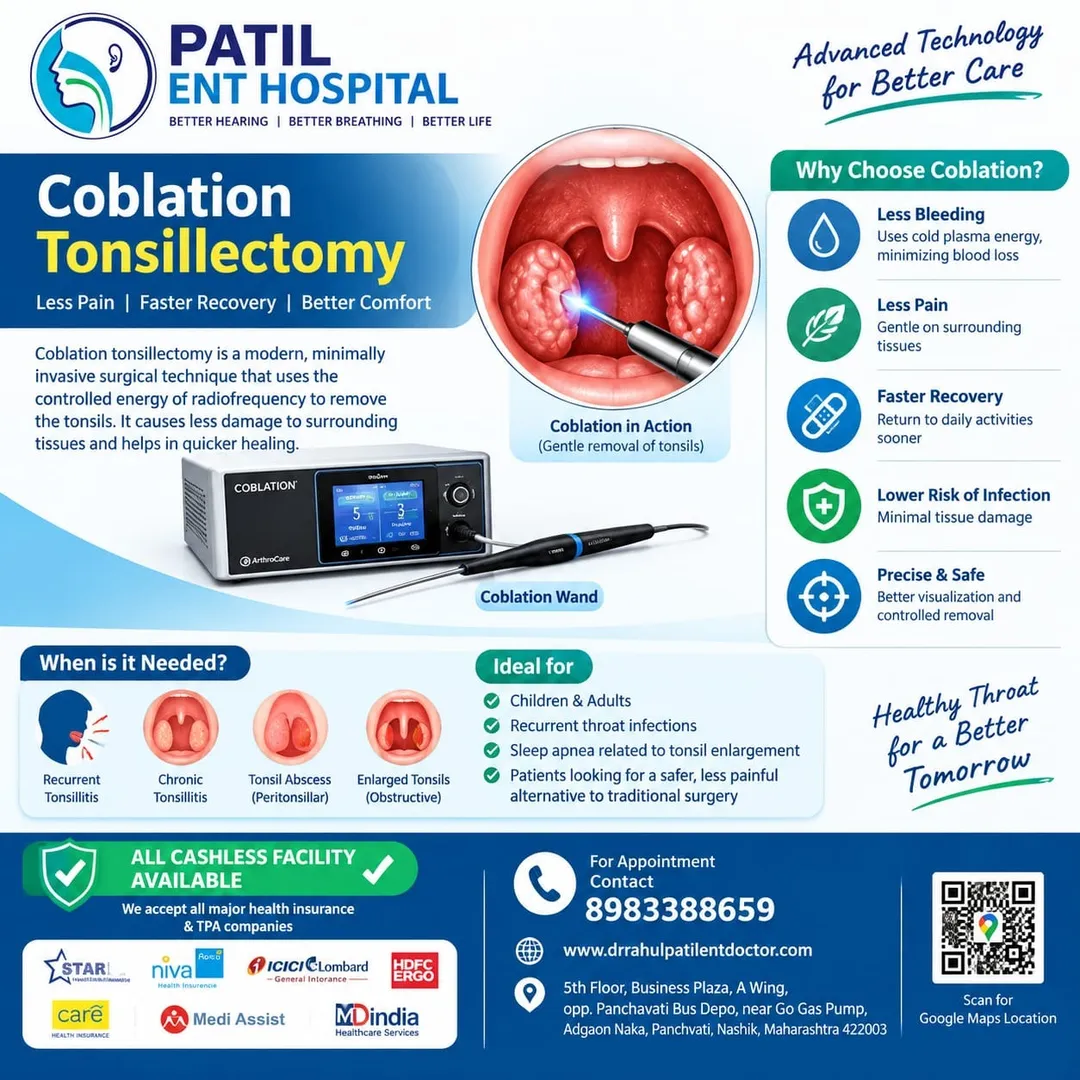
Patil ENT Hospital, Nashik offers modern ENT surgical care, including Coblation Tonsillectomy, a technology-assisted technique used for removal or reduction of diseased tonsillar tissue.
What is Coblation Tonsillectomy?
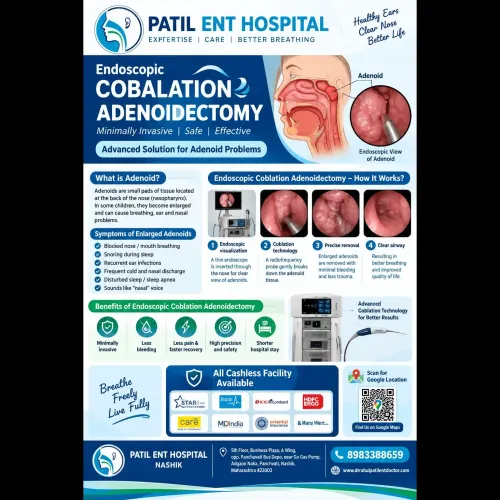
Coblation Tonsillectomy uses controlled radiofrequency energy in a conductive medium to remove tonsillar tissue at relatively low temperatures compared with conventional electrocautery. The technique can allow precise tissue removal with controlled coagulation.
Depending on the patient's condition and surgical indication, the ENT surgeon may perform:
- Extracapsular coblation tonsillectomy – complete removal of the tonsil.
- Intracapsular coblation tonsillectomy – removal/reduction of most tonsillar tissue while preserving the tonsillar capsule.
The choice of technique depends on the indication, patient's age, tonsil size, recurrent infection history, sleep-disordered breathing/OSA, and the surgeon's clinical assessment.
ADVANTAGES OF COBLATION TONSILLECTOMY
1. Controlled tissue removal
Coblation allows the surgeon to remove tonsillar tissue with controlled energy delivery and good visualization of the surgical field.
2. Less intraoperative blood loss in some studies
Several comparative studies and meta-analyses have reported lower intraoperative blood loss with coblation compared with electrocautery or laser techniques. However, the magnitude of benefit varies between studies and surgical techniques.
3. Potential reduction in postoperative pain
Coblation is designed to work at lower temperatures than conventional thermal cautery. Some studies have reported less postoperative pain, although the evidence is not uniform.
A meta-analysis comparing coblation with electrocautery found a trend toward lower postoperative pain, but the difference did not reach statistical significance.
4. Earlier return to normal diet
Some comparative evidence suggests that patients undergoing coblation may return to a normal diet sooner than patients undergoing electrocautery tonsillectomy.
5. Reduced thermal injury
Coblation generally uses lower temperatures than conventional electrocautery. This may reduce surrounding thermal tissue damage and can contribute to the rationale for using the technique.
6. Useful in children and adults
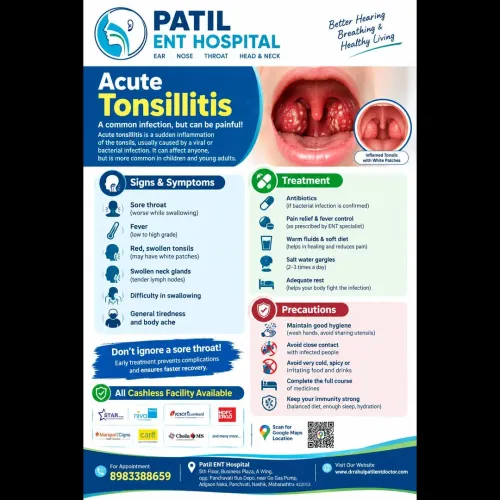
Coblation techniques can be used in appropriately selected children and adults for conditions such as:
- Recurrent tonsillitis
- Enlarged tonsils
- Obstructive sleep-disordered breathing
- Obstructive sleep apnea associated with enlarged tonsils
- Tonsillar hypertrophy
- Recurrent peritonsillar infection in selected patients
- Difficulty swallowing related to enlarged tonsils
7. Intracapsular coblation may reduce postoperative morbidity
Intracapsular coblation leaves the tonsillar capsule intact and may reduce exposure of the underlying tonsillar bed.
A 2024 systematic review and meta-analysis involving 9,821 patients undergoing intracapsular coblation reported an overall postoperative hemorrhage proportion of approximately 1.0%, with primary hemorrhage about 0.1% and secondary hemorrhage about 0.8%. The authors also found encouraging results regarding long-term outcomes, although further tonsil surgery was required in a small proportion of patients.
COBLATION VS CONVENTIONAL ELECTROCAUTERY
FeatureCoblationConventional ElectrocauteryEnergy technologyRadiofrequency/plasma-basedThermal electrocauteryTissue temperatureRelatively lowerHigherTissue dissectionControlledEffective thermal dissectionIntraoperative blood lossMay be lower in some studiesEffective hemostasisPostoperative painMay be lower in some studiesCan be significantReturn to dietMay be earlier in some studiesVariablePostoperative bleedingStill possibleStill possibleEvidenceBenefits vary among studiesEstablished technique
Important: Coblation does not eliminate postoperative pain or bleeding. Tonsillectomy, irrespective of technique, carries a risk of postoperative hemorrhage and other complications.
WHAT DOES THE META-ANALYSIS SHOW?
Published evidence is somewhat mixed.
A systematic review and meta-analysis of 10 randomized controlled studies involving 1,056 patients comparing coblation with electrocautery found:
- Lower intraoperative blood loss with coblation.
- Faster return to a normal diet with coblation.
- No statistically significant difference in postoperative pain.
- No significant difference in overall postoperative complications.
- No significant difference in operative time.
Another systematic review and meta-analysis involving adult patients compared coblation with bipolar diathermy. It included 1,824 patients from six studies and found no statistically significant difference in reactionary hemorrhage, delayed hemorrhage, or postoperative pain.
A network meta-analysis involving 6,464 patients compared several tonsillectomy techniques and found favorable postoperative pain and bleeding outcomes with intracapsular coblation. However, the authors recommended further prospective studies to confirm these findings.
Evidence-based conclusion
Coblation is a well-established tonsillectomy technique and may offer advantages such as controlled tissue removal, reduced intraoperative blood loss in some comparisons, and potentially easier postoperative recovery. However, the evidence does not demonstrate that coblation is universally superior to every other tonsillectomy technique. Outcomes also depend on the surgical technique, intracapsular versus extracapsular approach, patient characteristics, and surgeon experience.
POSTOPERATIVE CARE AFTER COBLATION TONSILLECTOMY
Patients are generally advised to:
- Drink adequate fluids.
- Follow the prescribed soft/cool diet initially.
- Take medicines exactly as prescribed.
- Avoid strenuous exercise until medically cleared.
- Avoid smoking and other airway irritants.
- Attend the scheduled postoperative follow-up.
- Seek urgent medical attention for fresh bleeding from the mouth or throat.
A white or yellowish coating over the tonsillar area during healing can be normal and does not necessarily indicate infection.
WHEN SHOULD YOU CONSULT AN ENT SPECIALIST?
Consult an ENT specialist if you experience:
- Recurrent tonsillitis
- Enlarged tonsils
- Difficulty swallowing
- Snoring with enlarged tonsils
- Mouth breathing
- Sleep-disordered breathing
- Suspected obstructive sleep apnea
- Recurrent peritonsillar infection
- Persistent tonsillar problems affecting daily life
The need for tonsillectomy should be decided after a proper ENT examination and assessment of the patient's individual indication.
PATIL ENT HOSPITAL – NASHIK
PATIL ENT HOSPITAL provides comprehensive ENT consultation and surgical care, including evaluation and management of tonsil and throat disorders.
All Cashless Facility Available
Cashless insurance/TPA facility available for eligible patients, subject to the individual insurance policy, insurer/TPA authorization, hospital network status, and applicable terms and conditions.
Address:
5th Floor, Business Plaza, A Wing,
Opp. Panchavati Bus Depot, Near Go Gas Pump,
Adgaon Naka, Panchavati, Nashik – 422003, Maharashtra.
Contact: 8983388659
Keywords